M1 Macrophages Identified as Key Players in Trained Immunity Against HSV-1 Infection
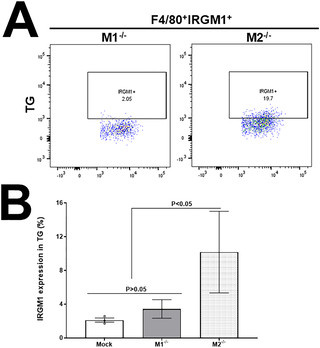
In a significant advancement in understanding immune responses to viral infections, a recent study has identified M1 macrophages as the primary drivers of trained immunity in mice latently infected with herpes simplex virus type 1 (HSV-1). Conducted by researchers at Cedars-Sinai Health Sciences University, the study utilized ATAC-seq, an epigenetic profiling technique, to analyze the chromatin accessibility changes in different macrophage subtypes—M0, M1, and M2—derived from bone marrow of HSV-1 infected mice. The findings revealed that M1 macrophages exhibited a markedly higher level of IRGM1-associated chromatin accessibility compared to M2 and M0 macrophages, particularly after stimulation with UV-inactivated virus. This suggests that M1 macrophages are uniquely equipped to develop a memory-like response to HSV-1 infection, enhancing their ability to secrete pro-inflammatory cytokines upon re-exposure to the virus. The study also highlighted that M2 macrophages do not exhibit this trained immunity, underscoring a functional specialization between macrophage subsets. The researchers conducted a thorough analysis of memory responses in various macrophage populations, including those isolated from the spleen and cornea, confirming a significant increase in IRGM1 expression in M1 macrophages. These results not only redefine the understanding of macrophage roles in antiviral defense but also open new avenues for therapeutic strategies aimed at enhancing immune responses against HSV-1 while minimizing potential immunopathology. This research is particularly relevant given the widespread nature of HSV-1, which can lead to recurrent disease and severe immunopathological conditions. The study's implications extend beyond basic science, potentially informing future clinical approaches to modulate immune responses in patients with HSV-1 infections.














