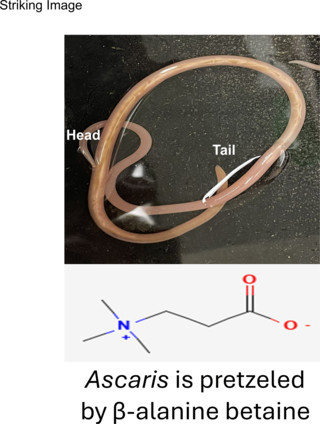
Discovery of β-alanine betaine as a cholinergic compound in Ascaris suum
A recent study has unveiled the presence of β-alanine betaine, a previously unrecognized cholinergic signaling compound, in Ascaris suum, a parasitic nematode that serves as a model for the human parasite Ascaris lumbricoides. This finding is particularly relevant given the rising concerns regarding the development of resistance to existing anthelmintic drugs, which are crucial for controlling soil-transmitted helminths that affect approximately 1.5 billion people globally. The limited number of available anthelmintic compounds underscores the urgent need for new drugs that can effectively target these parasites.
The research conducted by a team from Iowa State University involved collecting pseudocoelomic fluid from female A. suum and analyzing it using hydrophilic interaction liquid chromatography coupled with mass spectrometry (HILIC-MS). The analysis revealed signals consistent with acetylcholine (ACh), choline, and β-alanine betaine, confirming the presence of the latter compound. Notably, the study found that while the injection of betaine had no observable effect on the worms, the injection of β-alanine betaine resulted in characteristic muscle contractions, indicating its potential role as an endogenous ligand for a specific subfamily of nicotinic receptors (DEG-3/DES-2).
The research also highlighted the significant differences in receptor selectivity among cholinergic anthelmintics, such as levamisole and pyrantel, which target different nAChRs. These differences may contribute to the varying resistance profiles observed in nematodes. The study's findings suggest that β-alanine betaine could serve as a novel drug target, particularly because its receptor analogues are not found in human or animal hosts, thus potentially reducing the risk of cross-resistance.
Moreover, the study demonstrated that β-alanine betaine increased intracellular calcium levels in intestinal cells and depolarized the membrane potential of muscle cells in A. suum. The compound also inhibited motility in Caenorhabditis elegans, further supporting its role as an endogenous ligand in anaerobic nematodes. This expanded understanding of nicotinic acetylcholine receptor subfamilies in nematodes may reflect their need for a diverse range of cholinergic ligands to facilitate complex neuronal control, which could be exploited for the development of new anthelmintic therapies.
The implications of this research are significant, as it not only identifies a new compound that may help combat drug resistance in nematodes but also opens avenues for developing targeted treatments that could improve public health outcomes for populations affected by soil-transmitted helminth infections. The study was published in PLoS Neglected Tropical Diseases and underscores the importance of continued research into the biochemical mechanisms of parasitic infections and their treatment.














