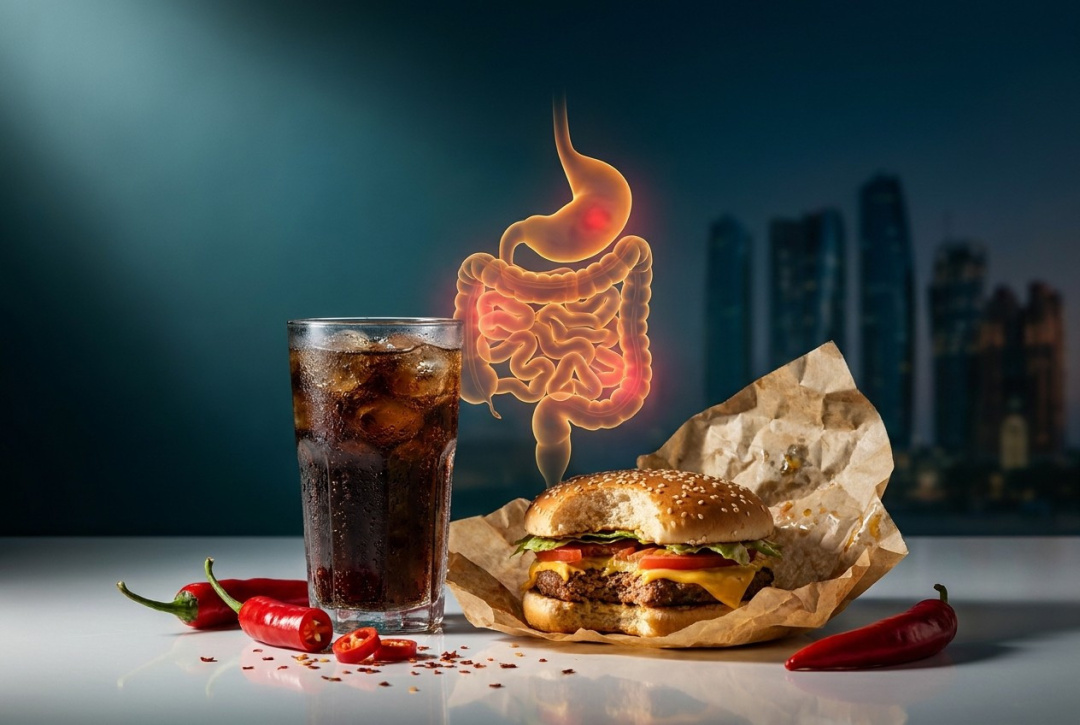
Research Links Ultra-Processed Foods to Rising Crohn's Disease Cases

In a world increasingly defined by convenience, the consumption of ultra-processed foods (UPFs) is undergoing intense scientific scrutiny due to its potential role in the rising prevalence of chronic illnesses, particularly Crohn's disease. A recent review published in the journal Nutrients synthesizes over a decade of research, presenting compelling evidence that diets high in UPFs are strongly linked to a heightened risk of developing this severe inflammatory bowel condition. This finding challenges contemporary eating habits and raises questions about the health implications of foods designed for shelf stability and consumer appeal.
The implications of this research extend to public health, economic policy, and individual dietary choices. As the incidence of inflammatory bowel diseases (IBD), including Crohn's disease and ulcerative colitis, escalates—especially in countries where diets are dominated by packaged and ready-to-eat items—scientists are shifting focus from genetic factors to environmental triggers. The evidence suggests that modern dietary patterns may be priming the digestive system for chronic inflammation and disease.
Historically, Crohn's disease was viewed as a rare condition, but today, nearly five million individuals globally are affected by IBD, a number that has surged alongside the globalization of Western dietary practices. This dietary shift is characterized not only by macronutrient content but also by the pervasive intake of UPFs, which are typically industrially formulated products containing minimal whole food and a variety of additives designed to enhance flavor and shelf life.
The review analyzed data from population studies, laboratory experiments, and clinical dietary interventions, revealing a consistent pattern: individuals with higher UPF consumption are significantly more likely to be diagnosed with Crohn's disease. Interestingly, this association is less pronounced for ulcerative colitis, suggesting that Crohn's disease may be particularly sensitive to dietary influences.
To understand the risks associated with UPFs, it is essential to define what constitutes these foods. According to the NOVA food classification system, ultra-processed foods are products made from industrial formulations of ingredients derived from foods and additives, often created through extensive industrial processes. Common examples include sugary cereals, packaged snacks, reconstituted meats, instant noodles, and soft drinks. These products are designed to be hyper-palatable and are often laden with substances not typically found in home-cooked meals, such as modified starches and hydrogenated oils.
The research indicates that the issue is not merely that UPFs displace healthier food options; their very composition may actively disrupt gut physiology. This marks a paradigm shift in how we view these foods, moving from seeing them as simply "empty calories" to recognizing them as potential disruptors of biological systems.
Mechanistic studies have begun to outline how UPFs may contribute to disease development. Certain additives, such as emulsifiers like carboxymethylcellulose (CMC) and polysorbate-80, are under scrutiny for their potential to thin the protective mucus layer of the intestine, allowing harmful bacteria to penetrate the intestinal wall. Other ingredients, including carrageenan and maltodextrin, may increase intestinal permeability, often referred to as "leaky gut," which can lead to immune system activation.
While the review presents strong associative and mechanistic evidence, the authors caution that it does not establish definitive causation. Individuals with high UPF intake may also exhibit other lifestyle factors that influence disease risk, such as increased stress and lower physical activity levels. This complexity highlights the challenges inherent in nutritional epidemiology.
Despite these uncertainties, the convergence of evidence regarding UPFs and Crohn's disease is becoming increasingly difficult to overlook. For those already diagnosed with IBD, higher UPF consumption is correlated with more active disease and an increased risk of relapse. Conversely, dietary interventions that reduce or eliminate UPF intake, such as the Crohn's Disease Exclusion Diet (CDED), have shown promise in inducing remission, particularly among pediatric patients.
Experts recommend focusing on whole or minimally processed foods—such as fruits, vegetables, legumes, and unprocessed meats—whenever possible. Learning to read labels and identify long lists of unfamiliar additives can empower consumers to make healthier choices.
The rapid transformation of dietary patterns over recent decades—from local and seasonal to global and industrial—poses significant challenges for gut health. As the human digestive system adapts to an onslaught of novel chemical compounds and food structures, research suggests that this mismatch may have serious health consequences for many individuals.