Restoration of New Zealand Farm Leads to Return of 69 Bird Species
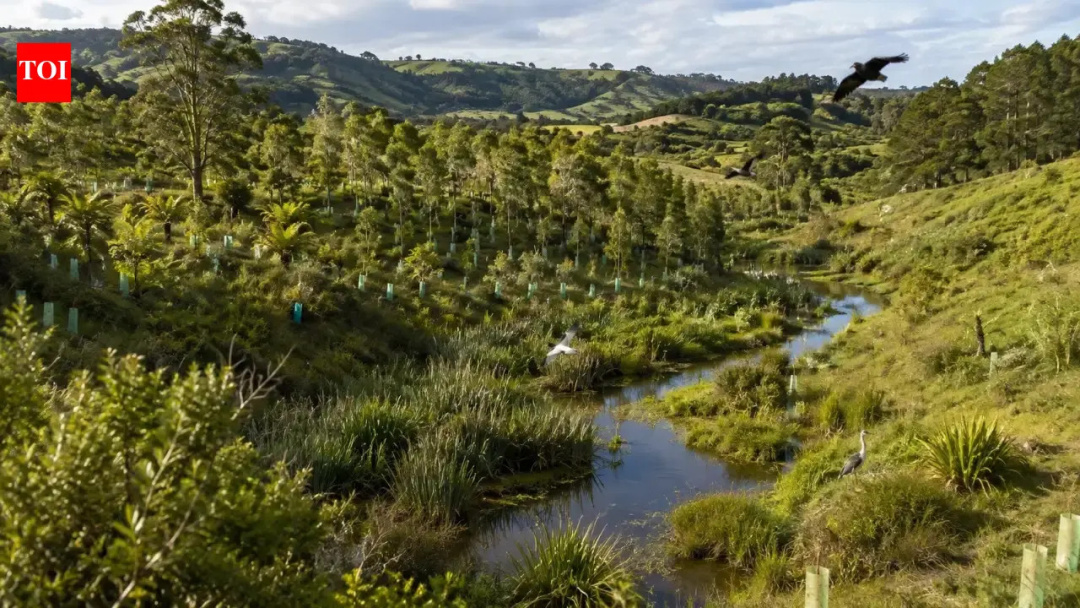
In a remarkable transformation, a rundown cattle farm in New Zealand’s Northland region has become a vibrant ecosystem following extensive restoration efforts initiated in 2004 by Auckland academics John Craig and Anne Stewart. The Tahi Estate, which spans approximately 1,334 acres, was once heavily grazed and stripped of much of its native habitat. The restoration project involved removing cattle, replanting native vegetation, and restoring wetlands, which has led to the return of numerous bird species to the area. Over the course of more than two decades, the estate has been revitalized through the planting of over 250,000 native trees and the reconstruction of wetlands, creating diverse habitats that support wildlife. According to a study published in the New Zealand Journal of Ecology, the abundance and diversity of native forest birds are closely linked to the amount of remaining forest cover, with significant declines noted when forest cover drops below 5-10%. The research highlights the importance of protecting and restoring forest habitats alongside effective pest management to rebuild native bird populations in degraded landscapes. The Tahi Estate has recorded 69 bird species, many of which are rare or threatened, compared to fewer than 20 species at the start of the restoration. Notably, the property has seen the return of species such as the kiwi and the Australasian bittern, with some birds arriving naturally without deliberate introduction. This underscores the ecological significance of the restoration efforts, as the return of wildlife indicates that the project is successfully rebuilding ecological functions rather than merely creating aesthetically pleasing landscapes. Integral to this success has been the implementation of rigorous pest management strategies to control introduced predators that threaten native birds. The economic model developed by Craig and Stewart also reflects a sustainable approach to conservation, incorporating elements such as mānuka honey production, beekeeping, and ecotourism. This model not only supports the local economy but also funds ongoing biodiversity and cultural conservation efforts. The Tahi Estate exemplifies how agricultural land can be restored to support ecological diversity while remaining economically viable. The project demonstrates that conservation, community, and commerce can coexist, providing a framework for future restoration initiatives.