Korean Society for the Study of Obesity Highlights 23.4 Trillion Won Cost of Obesity
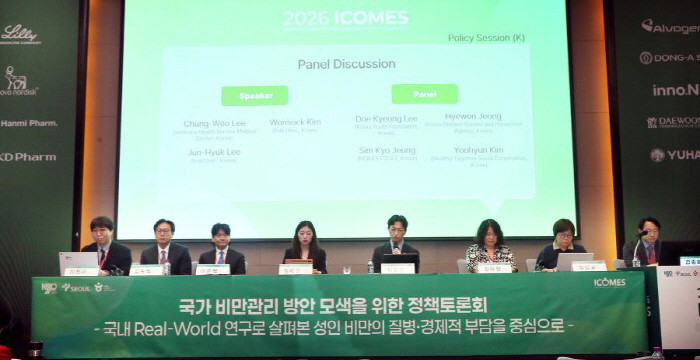
On September 3rd, the Korean Society for the Study of Obesity (KSSO), chaired by Kim Min-sun, held a special policy session titled "Policy Discussion on Seeking National Obesity Management Measures" at Conrad Seoul. This event coincided with the International Congress on Obesity and Metabolic Syndrome (ICOMES). The session focused on the real-world implications of adult obesity, examining its disease burden and economic impact while discussing necessary policy improvements.
Chairperson Kim Min-sun remarked that obesity is not just an individual issue but a chronic disease stemming from complex socio-structural factors. She noted that obesity poses a significant health threat, increasing the risk of premature death and leading to over 200 complications. Kim emphasized that the absence of effective obesity policies exacerbates health inequalities and results in higher medical costs and reduced productivity. The KSSO aims to accumulate academic evidence and collaborate with various stakeholders to ensure obesity is recognized as a disease, advocating for an integrated national management system.
Seo Mihwa, a member of the National Assembly's Health and Welfare Committee, echoed these sentiments in a video message, stating that current domestic policies do not adequately address the needs of adults suffering from obesity. She reaffirmed her commitment to advancing the "Bill on the Prevention and Management of Obesity," introduced earlier this year, to ensure effective implementation.
Professor Lee Cheong-woo from the VHS Medical Center presented findings on the disease burden of adult obesity in Korea, utilizing data from approximately 350,000 individuals from the National Health Insurance Service (NHIS). He highlighted a subgroup of patients with clinical obesity, whose health complications, such as hypertension and metabolic disorders, significantly exceed those of non-obese individuals. A survey of 508 adults revealed that those with more severe obesity reported lower quality of life and higher incidences of sleep disorders. Despite 79.9% attempting weight loss, only 8.5% found their efforts very effective, with many patients not receiving appropriate treatment.
Professor Kim Won-suk discussed the economic burden of obesity, revealing that medical costs for obese adults are 79-174% higher than for those with normal weight. When accounting for productivity losses and premature death, the annual socioeconomic cost of obesity is projected to reach 23.4 trillion won. He stressed that timely interventions could reduce the risk of obesity-related diseases by 7-20%, advocating for investment in obesity management to mitigate future healthcare costs.
Professor Lee Jun-hyeok analyzed domestic obesity policies, noting that while the World Health Organization calls for equitable access to obesity treatment, South Korea's approach remains regulation-focused rather than supportive. He urged the government to develop a comprehensive plan for obesity management that includes health insurance support and legislative efforts to create an Obesity Act.
The session concluded with discussions on the rising obesity rates among young adults, with 33.5% of those aged 19-29 classified as obese. Experts emphasized the need for a national support system for obesity management, advocating for policies that address socio-structural factors contributing to this public health challenge. Jeong Hye-won from the Korea Disease Control and Prevention Agency affirmed the KDCA's commitment to collaborating with the Ministry of Health and Welfare to enhance the domestic obesity management framework.