UCLA Studies Reveal How Metabolism Influences Radial Glia in Brain Development
Before birth, the human brain undergoes a complex assembly process driven by cellular choices, primarily involving radial glia. These specialized stem cells are essential for producing neurons and support cells in the cerebral cortex, the region responsible for cognitive functions such as thought, memory, and language. Radial glia are also linked to the significant expansion of the human cortex compared to other species. While most of these cells disappear before birth, similar cells can reappear in brain cancers, a phenomenon that remains poorly understood.
Aparna Bhaduri, an assistant professor at UCLA's David Geffen School of Medicine, emphasizes the importance of radial glia, stating, "They're really key to making us human. But they're also at the center of many neurodevelopmental and neuropsychiatric disorders, as well as cancer -- so understanding how they make their decisions is one way to start understanding how those conditions arise."
Two recent studies published in the journals Cell and Science provide deeper insights into how radial glia make developmental decisions. The first study, conducted by Bhaduri's team in collaboration with Heather Christofk's lab, created a detailed metabolic map of the developing human cortex. This research revealed that metabolism significantly influences the types of cells produced by radial glia. Specifically, the study found that these stem cells rely heavily on the pentose phosphate pathway, a metabolic route that utilizes glucose to create essential materials for rapidly dividing cells. When glucose availability was reduced or this pathway was disrupted, the radial glia altered their output, generating more inhibitory neurons and other cell types that typically emerge later in development.
Bhaduri remarked, "What was surprising is that metabolism isn't just a passive thing that happens in the background. It can really control how stem cells make decisions." This discovery opens avenues for exploring how maternal nutrition and metabolic disorders might impact brain development.
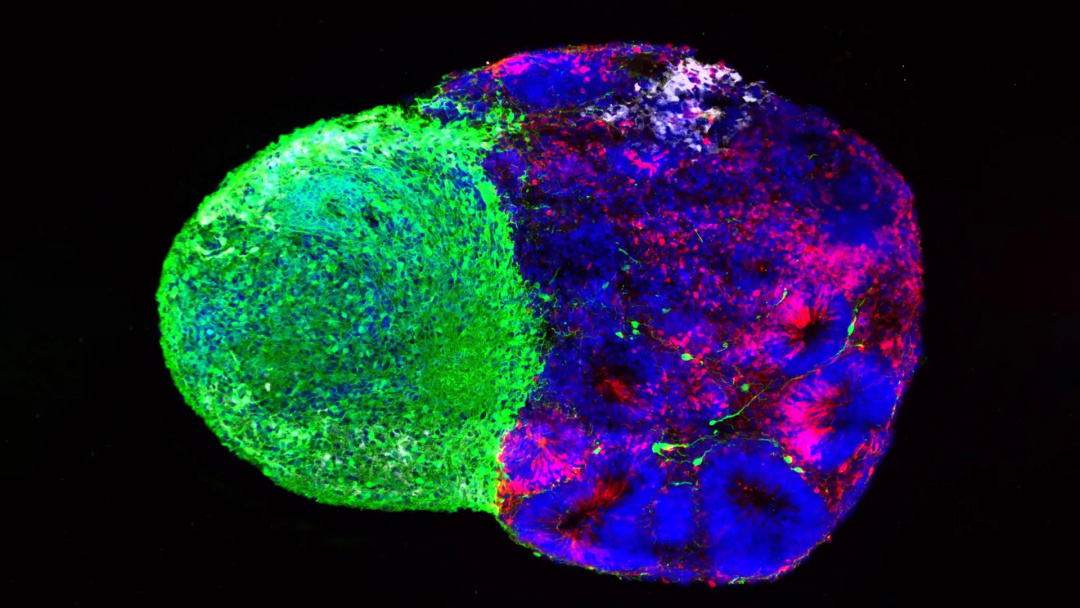
The second study focused on the influence of the thalamus, a brain structure that relays information throughout the nervous system. The researchers found that thalamic projections physically interact with radial glia during early brain development, prompting these stem cells to produce more excitatory neurons, which are crucial for cortical signaling. This physical connection, previously unidentified, is believed to play a significant role in the unique development of the human cortex compared to other species.
The researchers linked this interaction to the NRXN1 gene, known for its role in neuronal connectivity and associated with autism spectrum disorder. By studying assembloids derived from patient cells with NRXN1 mutations, the team observed altered thalamic signals that affected the balance between stem cell populations and neuron production, providing a potential model for investigating how early developmental disturbances may influence cortical formation.
Though these studies examine different mechanisms, they converge on the idea that radial glia do not operate in isolation. Their decisions are continuously shaped by both metabolic signals and physical connections in their environment. This research underscores the transformative impact of organoid technology on understanding human brain development, allowing scientists to recreate and investigate the behavior of human neural stem cells in ways that were not previously possible.
Bhaduri hopes these findings will encourage a shift in perspective, viewing metabolism and cellular connections as active drivers of development rather than mere background processes. Understanding these mechanisms is a crucial step toward unraveling the complexities of normal brain development and the vulnerabilities that may lead to disease.