Study Highlights Challenges of Niclosamide Ethanolamine for Echinococcosis
Alveolar echinococcosis (AE) is a serious disease caused by the larval stage of the fox tapeworm Echinococcus multilocularis, which primarily affects the liver and can lead to severe complications if untreated. Current treatment options, primarily based on the drugs albendazole or mebendazole, are not curative and can lead to significant side effects, underscoring the urgent need for more effective therapies. A recent study explored the repurposing of niclosamide ethanolamine (NEN), a formulation designed to improve the bioavailability of niclosamide, for the treatment of AE.
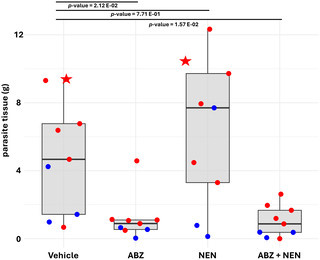
In vitro assessments indicated that both niclosamide and NEN exhibited strong efficacy against E. multilocularis metacestode vesicles, with IC50 values below 0.3 µM, suggesting that NEN could reach effective concentrations in the liver. Metabolic analyses indicated that NEN acts as a mitochondrial uncoupler, leading to structural damage in the metacestode tissue. However, when tested in vivo using a mouse model, NEN did not significantly reduce the parasite burden, despite achieving blood concentrations above 1 µM. This discrepancy between in vitro and in vivo results raises questions about the factors influencing drug uptake and metabolism in the host.
The study concluded that while NEN shows promise in laboratory settings, its efficacy in living organisms remains unproven. The authors suggest that future research should focus on developing new formulations and delivery strategies to enhance the drug's effectiveness against AE. Given the rising incidence of AE in certain regions, particularly in Europe, the need for improved treatment options is more pressing than ever.
This research highlights the complexities involved in translating laboratory successes into effective clinical treatments and the ongoing challenges faced in combating neglected tropical diseases like AE. The findings call for continued exploration of novel therapeutic strategies to address the limitations of current treatment options and improve patient outcomes.














