Switzerland's 'Proof by Underpants' Study Highlights Soil Health Issues
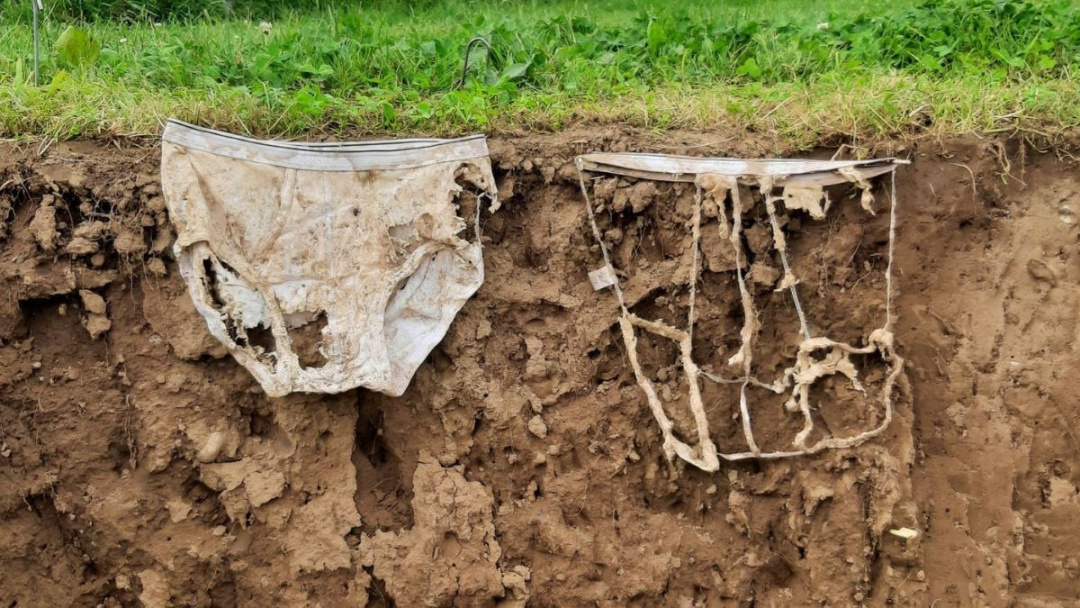
In a novel approach to soil health assessment, scientists in Switzerland have buried more than 2,000 pairs of cotton underwear across diverse environments, including gardens, meadows, and fields. This initiative, dubbed "Proof by Underpants," aims to draw attention to the critical state of soil health, which is essential for food production and biodiversity. After two months, researchers retrieved the buried underwear, finding varying degrees of decomposition that reflect the biological activity of the soils in which they were buried.
The findings, published in the journal Plants, People, Planet, indicate that some pairs of underwear had decomposed significantly, while others remained largely intact, suggesting differences in soil nutrient levels and biological activity. The study's authors noted that the underwear serves as an accessible and engaging tool for illustrating soil health, with the degree of decomposition providing insights into the richness of the soil's ecosystem.
Led by scientists from the University of Zurich, the research highlights the alarming reality that many soils are degrading rapidly, posing a threat to food security and ecological balance. The authors explain that healthy soils are vital for nutrient cycling and supporting diverse ecosystems, yet many people remain unaware of the seriousness of soil degradation.
To raise awareness, the researchers proposed the "Underpants Index," which uses the condition of the buried underwear as a measure of soil health. The study found that land use practices significantly influenced soil quality; for instance, private gardens exhibited the highest levels of biological activity and organic carbon, while lawns and croplands showed lower signs of decomposition and nutrient presence.
Interestingly, while private gardens demonstrated greater soil fertility, the researchers cautioned that excessive nutrient levels—often due to fertilizer use—could disrupt the natural balance of soil health. This highlights the complexity of soil management, as high nutrient concentrations could lead to negative impacts on surrounding ecosystems, including waterways.
The project, which involved the participation of 1,000 volunteers, also included the burial of 12,000 tea bags, with both items yielding similar results regarding decomposition rates. The underwear experiment, however, was noted for its playful approach, making it an effective outreach tool to engage the public in discussions about soil health.
As the researchers concluded, understanding the factors that contribute to soil degradation is essential for developing effective conservation strategies. The data gathered from this study could guide future efforts to improve soil management practices, ensuring that this vital resource is protected for generations to come. The study serves as a reminder of the importance of soil health in sustaining our food systems and biodiversity, and it opens the door for similar initiatives worldwide to promote soil conservation efforts.