Wood Frog's Hibernation Strategy Offers Insights for Organ Preservation
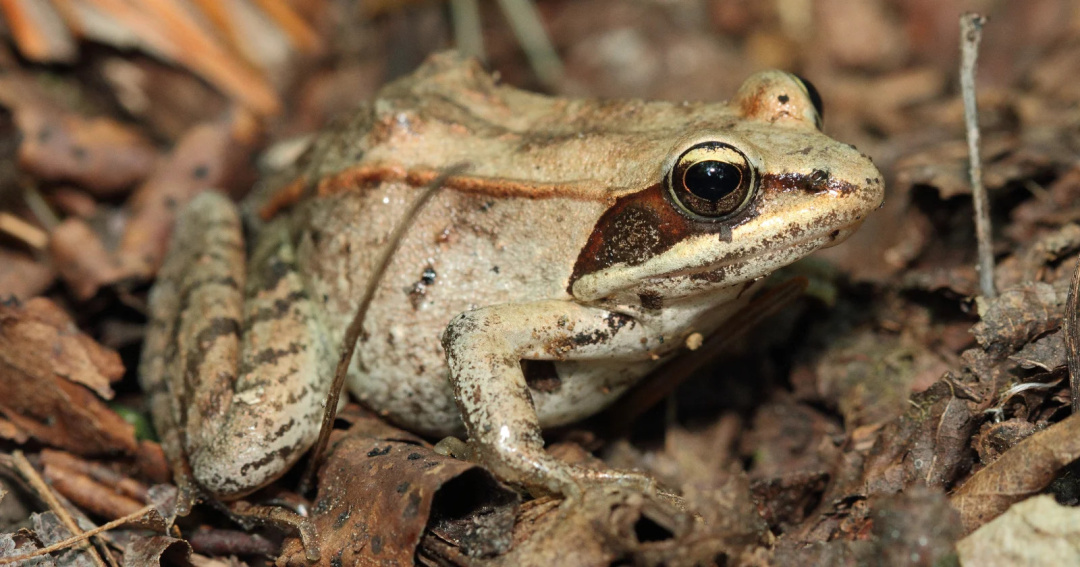
In the depths of a Canadian winter, a wood frog can be picked up and feels as solid as a stone. Its eyelids are crusted with ice, and it shows no signs of life—no heartbeat, no breathing, and nearly two-thirds of its body water is frozen in the spaces between its cells. Shannon Tessier, a researcher at Massachusetts General Hospital, describes this state as clinically dead. Yet, when spring arrives, the frog thaws and resumes its life as if nothing had happened. This extraordinary ability is now the focus of scientific research aimed at solving one of medicine's most pressing challenges: organ preservation.
The freezing process begins externally, with ice forming on wet leaf litter that comes into contact with the frog's permeable skin. Within minutes, the liver breaks down glycogen stores and releases glucose into the bloodstream, acting as a natural antifreeze. Kenneth Storey from Carleton University, who has studied this species extensively, notes that 65 to 70 percent of the frog's total body water freezes outside the cells, which is survivable, while ice forming inside the cells would be fatal.
In preparation for freezing, the frogs also accumulate urea, rebuild their cell membranes, and increase their antioxidant levels before the first frost. Research has shown that northern populations of wood frogs can endure freezing temperatures as low as -16°C, significantly colder than their southern counterparts. A study by M. Clara F. do Amaral found that this resilience is linked to a larger liver glycogen reserve that mobilizes more quickly when freezing begins.
Currently, every donated organ faces a time constraint once it leaves the donor's body. The standard practice involves static cold storage, which is a rudimentary method of packing the organ in ice and racing it to the recipient. This urgency is reflected in the statistics: over 100,000 people in the United States are on the waiting list for transplants, with approximately thirteen dying each day before receiving an organ. Extending the preservation time from hours to days could transform organ transplantation from a race against time into a more manageable logistical process.
The wood frog's ability to survive prolonged periods of freezing has captured the attention of researchers. In a significant breakthrough, a study published in 2019 demonstrated that using a modified sugar, 3-O-methyl-D-glucose, in combination with supercooling techniques, allowed scientists to keep five human livers viable for 27 hours at -4°C—nearly three times the usual preservation window. This work, supported by the National Institutes of Health, challenges the traditional view that ice must be entirely avoided in organ preservation.
In 2022, Tessier's team further explored this concept by successfully preserving rat livers at temperatures between -10°C and -15°C for five days, even with ice present. This innovative approach, which mimics the wood frog's natural adaptations, has significantly increased preservation times. More recently, a pig kidney was preserved for ten days using similar techniques, demonstrating the potential for real-world applications in organ transplantation.
The challenge, however, lies not just in freezing but in the thawing process. If organs are warmed too slowly or unevenly, ice can form and cause irreparable damage. Researchers at the University of Minnesota are addressing this issue by using iron oxide nanoparticles to heat organs from within using alternating magnetic fields, successfully storing rat kidneys for up to 100 days before transplantation.
The complexity of the wood frog's survival strategy highlights that there is no single solution to organ preservation. It involves a series of tightly coordinated biological changes, including ice nucleation, sugar loading, membrane adjustments, metabolic shutdown, and antioxidant defense. Rasha Al-Attar, a biologist in Tessier's lab, is investigating gene editing to enhance cell tolerance to cryoprotectants. As Storey and Al-Attar note, the wood frog serves as a valuable template for future research, though it cannot be directly replicated in human tissues.
The wood frog's exceptional adaptations offer a glimpse into potential advancements in organ preservation, which could save countless lives by extending the viability of human organs for transplantation. This research not only sheds light on the capabilities of this remarkable amphibian but also paves the way for innovative solutions in the field of medicine.