Theileria Parasites Induce Immune Evasion in Bovine Cells Through Epigenetic Changes
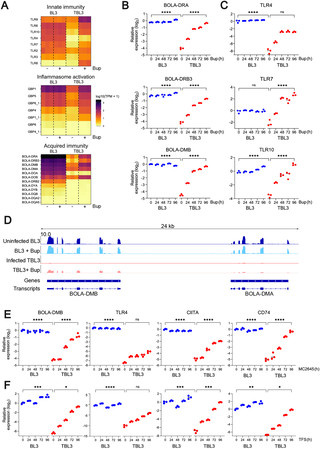
Recent research has uncovered significant insights into how Theileria annulata, a tick-borne intracellular parasite, manipulates the immune response in bovine hosts. This parasite infects B cells and macrophages, resulting in cancer-like traits that challenge the immune system's ability to eliminate infected cells. The study employed a multi-omics meta-analysis, integrating transcriptomic, proteomic, and epigenomic data, to explore the effects of Theileria infection on immune gene expression. The findings indicate that Theileria infection leads to widespread suppression of genes crucial for both innate and adaptive immunity. Specifically, genes encoding Toll-like receptors, components of the inflammasome, and major histocompatibility complex class II molecules were found to be downregulated in infected B cells. This repression is associated with alterations in the epigenome, including a loss of activating histone modifications on the promoters of these immune genes and an increase in silencing marks. Notably, treatment with various theilericidal drugs was shown to partially restore the expression of these immune genes, suggesting a potential therapeutic strategy to counteract the immune evasion mechanisms employed by the parasites. The implications of this research extend beyond veterinary medicine, as the mechanisms of immune evasion observed in Theileria-infected cells may provide insights into similar processes in human cancers. Understanding how these parasites achieve immune evasion could inform the development of new treatments targeting both the parasites and the cancer-like behaviors they induce in host cells. This study underscores the intricate relationship between infectious diseases and cancer biology, highlighting the need for further exploration into the epigenetic factors that contribute to these processes.