Study Reveals How Oxaloacetate Accumulation Disrupts Mitochondrial Function
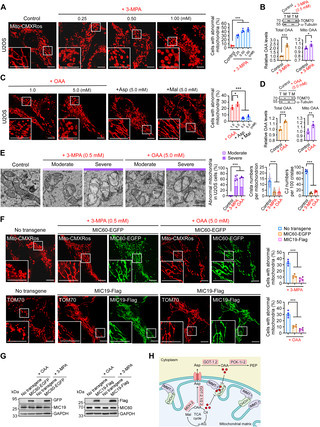
Mitochondria are essential organelles involved in cellular metabolism, playing a critical role in energy production through the tricarboxylic acid (TCA) cycle. A recent study published in PLOS Biology explores the effects of oxaloacetate (OAA) accumulation on mitochondrial function, revealing significant insights into mitochondrial damage mechanisms. The research, conducted using the model organism Caenorhabditis elegans, demonstrates that mutations in phosphoenolpyruvate carboxykinases lead to the buildup of OAA, which in turn causes severe mitochondrial damage. The study highlights that OAA accumulation disrupts the MICOS complex, specifically inhibiting the function of the MIC19 subunit, which is vital for maintaining mitochondrial membrane integrity. This disruption results in impaired mitochondrial morphology and function, as evidenced by the formation of spherical mitochondria and reduced ATP levels in affected organisms. The research further indicates that similar mitochondrial impairments occur in mammalian cells due to aberrant OAA levels. These findings underscore the importance of OAA metabolism in mitochondrial health and suggest that therapeutic strategies targeting OAA-related pathways could be beneficial for treating mitochondrial dysfunctions associated with metabolic disorders. By elucidating the mechanisms through which OAA affects mitochondrial architecture, this study provides valuable insights into potential interventions for conditions linked to mitochondrial dysfunction, such as metabolic diseases and neurodegenerative disorders. The implications of this research extend beyond basic science, as understanding these pathways could pave the way for novel therapeutic approaches to mitigate the effects of mitochondrial damage caused by metabolic imbalances.