Novel Dopamine D2 Receptor Antagonists Identified for Prolactin-Mediated Neuroprotection
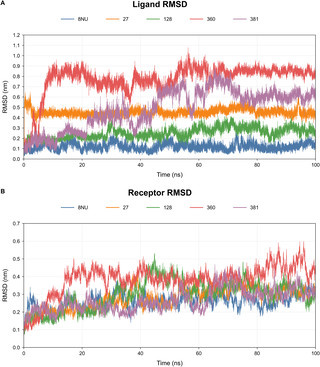
Recent research has unveiled novel dopamine D2 receptor (D2R) antagonists that may enhance prolactin levels, offering neuroprotective benefits while minimizing central nervous system (CNS) side effects. Prolactin, a hormone traditionally associated with lactation, is increasingly recognized for its neuroprotective properties, particularly in mitigating cognitive impairments under neurotoxic conditions such as environmental toxicity and excitotoxicity. The study aimed to identify D2R antagonists that could stimulate prolactin secretion without crossing the blood-brain barrier (BBB), thereby avoiding the CNS-related side effects commonly associated with existing antipsychotic medications like risperidone. Utilizing a systematic multi-stage in silico screening approach, the researchers began by screening the ZINC-20 database for structural analogs of risperidone, identifying 400 candidates. Through a series of filtering processes, including ADMET (absorption, distribution, metabolism, excretion, and toxicity) analysis, they narrowed down the list to 226 compounds predicted to be BBB-impermeable. Molecular docking simulations revealed eight candidates with favorable binding scores compared to risperidone, with four showing critical interactions with key residues involved in D2R binding. Among these, Compound #128 demonstrated the most promising stability profile in molecular dynamics simulations, suggesting its potential as a peripherally restricted D2R antagonist. The findings indicate that these compounds could serve as computationally prioritized candidates for further development aimed at enhancing prolactin levels and providing neuroprotection without the adverse effects associated with traditional D2R antagonists. However, the functional efficacy of these compounds, particularly their ability to elevate prolactin and confer neuroprotection, requires experimental validation. This research underscores the therapeutic potential of targeting the prolactin axis in the context of cognitive preservation against neurotoxicity, particularly in conditions involving organic solvent exposure.