Bearded Capuchin Monkeys Hunt Small Animals When Fruit Is Scarce, Informing Human Diets
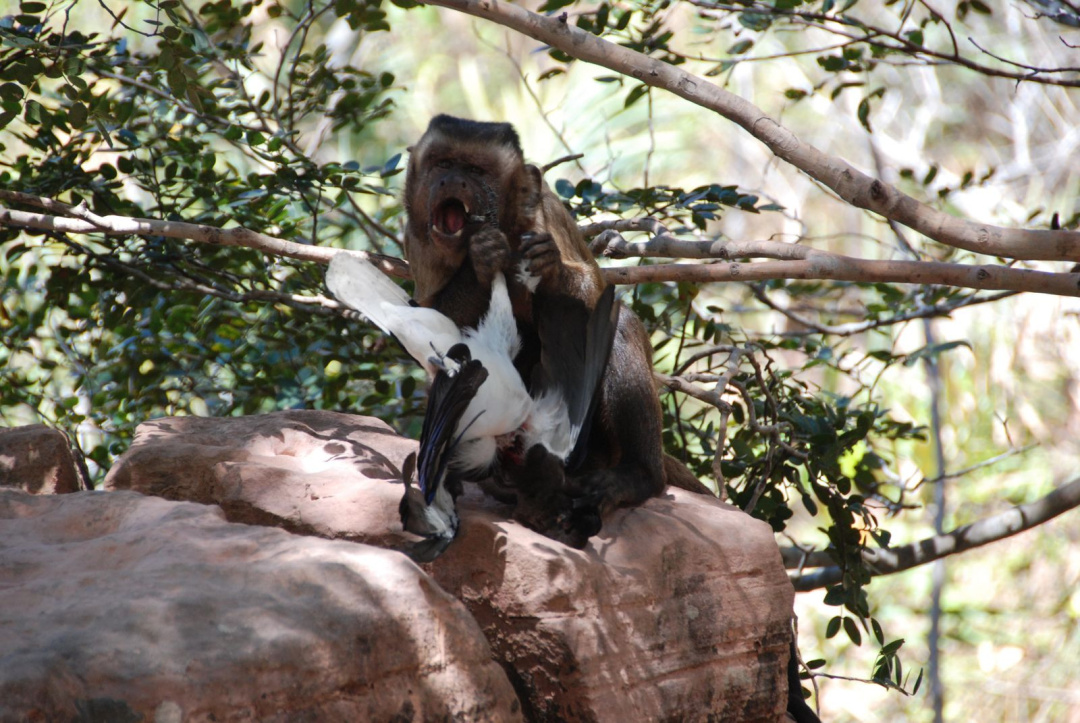
Bearded capuchin monkeys, primarily found in northeastern Brazil, typically consume a plant-based diet consisting mainly of palm nuts and various fruits. However, a recent study published in the journal PLOS One on August 26 highlights a significant behavioral adaptation: when their usual food sources become scarce, these monkeys turn to hunting small vertebrates, including snakes, opossums, iguanas, bats, rodents, and bird eggs. This finding not only sheds light on the dietary habits of these adaptable primates but also offers potential insights into the evolutionary origins of human meat consumption.
The research team, led by Susana Carvalho, a primatologist at Gorongosa National Park in Mozambique, observed wild capuchins over a period of more than 5,000 hours from May 2006 to December 2010. Initially focused on the monkeys' tool use and complex behaviors, the researchers noted the unexpected frequency with which the monkeys hunted and consumed small animals. They documented 446 instances of animal consumption, prompting a deeper investigation into the factors influencing these dietary shifts.
The study revealed that as plant foods became less available due to seasonal changes, the monkeys increased their hunting activities. Notably, lizards and rodents constituted the majority of their prey. The research also indicated that hunting behavior was prevalent across all age and sex groups, although adult and juvenile males were observed to hunt more frequently. Interestingly, when successful in their hunts, the monkeys often consumed the brains and guts of their prey first, suggesting a strategy to quickly obtain energy-rich fats and nutrients before competitors could intervene.
While chimpanzees are often highlighted for their hunting behaviors, this study emphasizes that other primate species, such as the bearded capuchins, also engage in similar predatory practices. Although these monkeys and humans are not closely related, their behaviors may provide valuable clues regarding the dietary evolution of early hominins. The researchers propose that as environmental conditions in eastern Africa became more arid during the late Pliocene and early Pleistocene, early human ancestors may have similarly adapted by incorporating more animal protein into their diets during times of plant food scarcity.
This research prompts a reevaluation of the fossil record to search for evidence of small vertebrate predation by early humans, potentially reshaping our understanding of the dietary strategies that may have led to the development of larger game hunting in our lineage. The findings underscore the adaptability of bearded capuchins and their role in providing insights into the evolutionary pathways of human dietary habits.