Study Shows Lambs Under Solar Farms Gain Weight Despite Less Grass
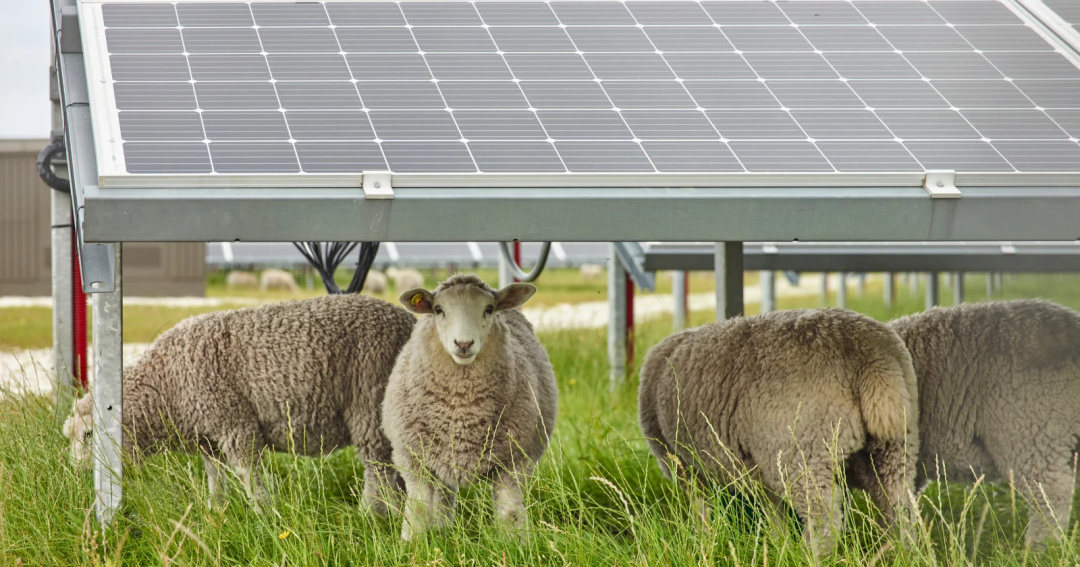
An experiment conducted at Oregon State University’s research farm in Corvallis examined the effects of grazing conditions on weaned Polypay lambs. The study involved two groups of lambs, each matched and weighed, grazing in two adjacent pastures: one exposed to the full sunlight of the Willamette Valley and the other shaded by a solar array. Over two years, the pasture under the solar panels produced 38% less forage compared to the open field, with the most significant reduction occurring directly beneath the solar panels. Typically, one would expect that reduced forage would lead to lighter lambs, but the findings contradicted this assumption.
In spring 2019, lambs grazing under the solar panels gained an average of 120 grams per day, while those in the open field gained 119 grams. The following year, the growth rates were similarly close, with solar lambs gaining 89 grams per day compared to 92 grams for their open-field counterparts. This statistical parity in growth despite a significant reduction in forage led researchers to investigate the quality of the grass itself.
The analysis revealed that the grass grown in shaded conditions was not merely less abundant; it had different characteristics. The shaded grass contained less fibrous material, which is often less nutritious, and instead was leafier and richer in protein and digestibility. This meant that the lambs were able to extract the necessary nutrition from a smaller quantity of food. The study's summary highlighted this trade-off: while the overall biomass was lower in the solar pastures, the higher quality of the forage compensated for the reduced quantity, resulting in equivalent lamb production.
Additionally, the solar panels provided an indirect benefit by keeping the lambs cooler during hot afternoons. Lambs in the open field had to expend more energy to regulate their body temperature, which led to increased water consumption—up to three-quarters of a liter more per lamb per day compared to those grazing in the shade. This energy conservation translated into more calories available for growth in the solar lambs.
The study, published in Frontiers in Sustainable Food Systems in 2021, is believed to be the first to measure livestock production in conjunction with solar energy generation. The economic analysis showed that grazing returns were nearly identical: $1,046 per hectare per year in the open pasture compared to $1,029 under the solar panels, a difference of less than 2%. Co-author Serkan Ates pointed out that these returns are comparable before considering the electricity generated by the solar panels, which is the primary purpose of the land.
However, the data did have some inconsistencies. The 38% reduction in forage was not uniform; areas in permanent shade performed poorly, while partially shaded regions sometimes outperformed the open field during the summer due to better moisture retention. Previous studies at the same site had noted that shaded grass could benefit from moisture retention, particularly in the dry Pacific Northwest summers.
This research has been referenced in ongoing discussions about land use, particularly the balance between food production and renewable energy generation. While critics often argue that solar panels on farmland reduce available pasture, the study demonstrates that the impact on livestock growth is negligible. The lambs grazing under solar panels were able to maintain their weight and health, effectively utilizing the higher quality forage available to them. This suggests that integrating solar energy production with agricultural practices could be a viable approach to maximizing land use without sacrificing livestock productivity.