Wealth Disparities Impact Child Stunting but Not Wasting in Nigeria
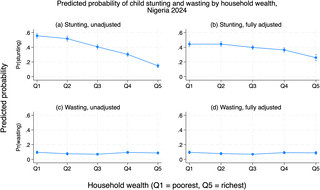
Child undernutrition continues to pose a significant health challenge in Nigeria and across sub-Saharan Africa. A recent study published in PLoS One examined the intricate relationship between household wealth and two critical indicators of child undernutrition: stunting and wasting. Utilizing data from the 2024 Nigeria Demographic and Health Survey, which included a sample of 9,410 children for stunting and 9,464 for wasting, the research aimed to understand how socioeconomic factors influence these outcomes.
Stunting, defined as low height-for-age, is a chronic condition that reflects prolonged undernutrition and can lead to irreversible physical and cognitive impairments. In contrast, wasting, characterized by low weight-for-height, is an acute condition often resulting from recent illness or inadequate food intake. The study found that household wealth was associated with stunting in a graded manner, suggesting that wealthier households had lower rates of stunting. Specifically, the prevalence of stunting declined significantly across wealth quintiles, from 55.6% in the poorest households to just 14.8% in the richest. Conversely, the analysis revealed no significant association between household wealth and wasting, indicating that the two conditions may be influenced by different social determinants.
The research highlights the importance of understanding the distinct mechanisms that underlie stunting and wasting. While both conditions are indicators of child undernutrition, they arise from different processes—stunting is linked to chronic deficiencies, whereas wasting is often the result of acute factors. This distinction is crucial for developing effective interventions. The findings suggest that strategies to combat stunting may need to focus on improving household wealth and addressing long-term nutritional needs, while approaches to reduce wasting could require different considerations, such as immediate food security and healthcare access.
The study also emphasizes the role of maternal education as a significant factor influencing child health outcomes. Educated mothers are more likely to be informed about nutrition and health practices, which can positively impact their children's growth. However, the study notes that education alone does not guarantee economic power or access to resources, particularly in contexts where cultural norms limit women's autonomy.
Geographic disparities further complicate the issue, as regions in Nigeria exhibit varying levels of wealth and access to education and healthcare. The northern regions, for instance, face higher poverty rates and lower educational attainment among women, exacerbating the challenges of child undernutrition.
In conclusion, the study underscores the need for targeted interventions that consider the specific socioeconomic factors influencing stunting and wasting. By recognizing the different pathways through which wealth impacts child health, policymakers and health practitioners can better address the unique challenges posed by these forms of undernutrition in Nigeria. The research serves as a call to action for comprehensive strategies that tackle both chronic and acute nutritional issues among children, ultimately aiming to improve health outcomes across the population.