MIT Develops Machine Learning Framework to Enhance Protein Design Beyond Natural Sequences
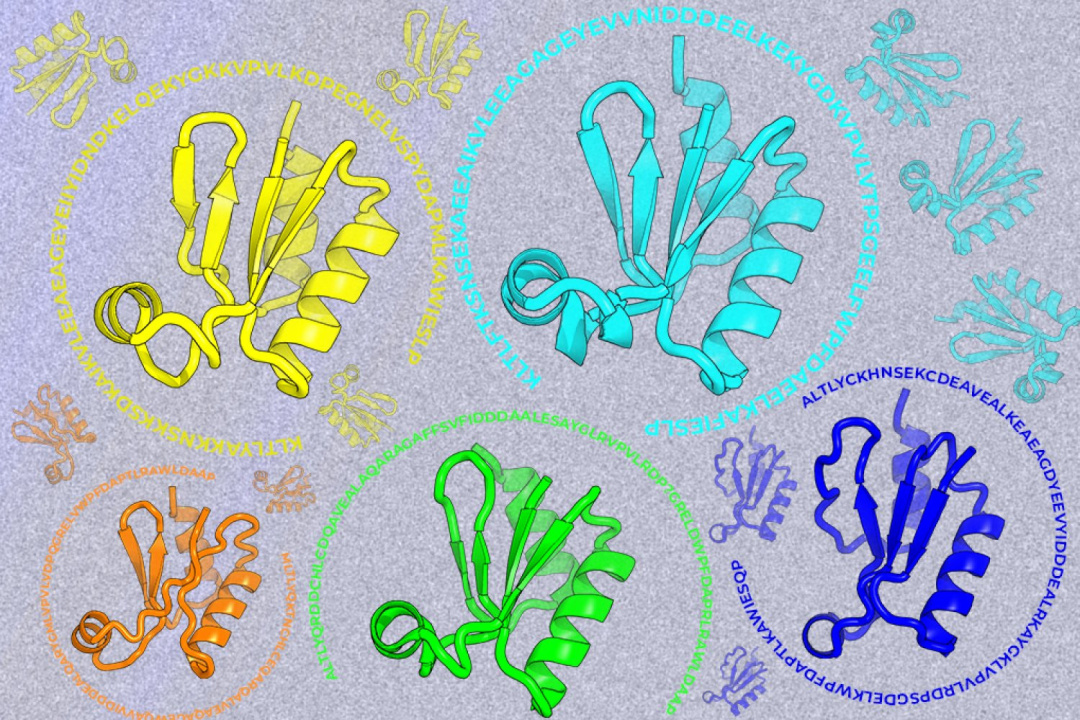
A protein's function is determined by its structure, which is influenced by the sequence of amino acids that compose it. Traditional methods for designing novel proteins, including those that could bind to disease-causing molecules, typically follow a two-step process: first determining the structure, then using a machine-learning framework to generate a range of sequences that might adopt that structure. However, many amino acid sequences can fold into the same structure, and conversely, a single sequence can adopt various structures based on its flexibility or functional triggers. This complexity presents a challenge for researchers using artificial intelligence (AI) to design new proteins, as they must guide AI to recognize the multitude of potentially useful sequences that can achieve the same fold.
Amy E. Keating, head of the Department of Biology at MIT and senior author of a recent paper published in PNAS, emphasizes that the field has long measured success by whether a model can replicate the protein sequences selected by evolution. However, her team's work suggests that this metric is not the most effective for protein design. The PottsMPNN framework incorporates physical principles that govern protein structure and stability, thereby enhancing the generation of sequences and improving predictions regarding how mutations will affect a protein's stability. This advancement allows for a better understanding of the sequence-energy landscape, which defines the relationship between each amino acid's identity and the protein's stability.
Integrating this framework into protein design pipelines enables researchers to create structurally feasible proteins with sequences that do not resemble any existing native proteins. Graduate student and lead author Foster Birnbaum notes that when designing a completely novel structure, there is no native sequence for comparison. The focus shifts to how likely the generated sequences are to fold into the desired structures and the model's understanding of the sequence-energy landscape.
Machine learning has significantly accelerated fundamental biological research, enabling reliable computational models to generate protein structures or sequences. Despite the rapid advancements, Birnbaum points out that the most widely used model today was released in 2022 and has yet to be surpassed. He reflects on the importance of understanding what makes this model so effective.
Birnbaum's research also explores the strategic application of "noise," or variations added to protein structures during training. This approach helps reduce the model's tendency to mimic native sequences too closely, enhancing the diversity of structures it can generate sequences for. PottsMPNN employs a pairwise distribution to account for interactions between amino acids, which is crucial for accurately modeling the sequence-energy landscape.
While incorporating evolutionary information into the training of PottsMPNN may seem like a reliance on native sequences, the model demonstrates that as it moves away from these sequences, its ability to predict structural compatibility and energy improves, even for novel proteins. Birnbaum expresses optimism about the potential for biological engineering as the ability to design any protein becomes feasible. He envisions further improvements to the model, which could enhance predictions regarding the outcomes of specific mutations.
Keating concludes that their methods are steering the field toward the design of useful new-to-nature proteins for a variety of applications, laying a stronger foundation for future advances in protein engineering.