Study Reveals How Snails Alter Mucus Properties for Various Needs
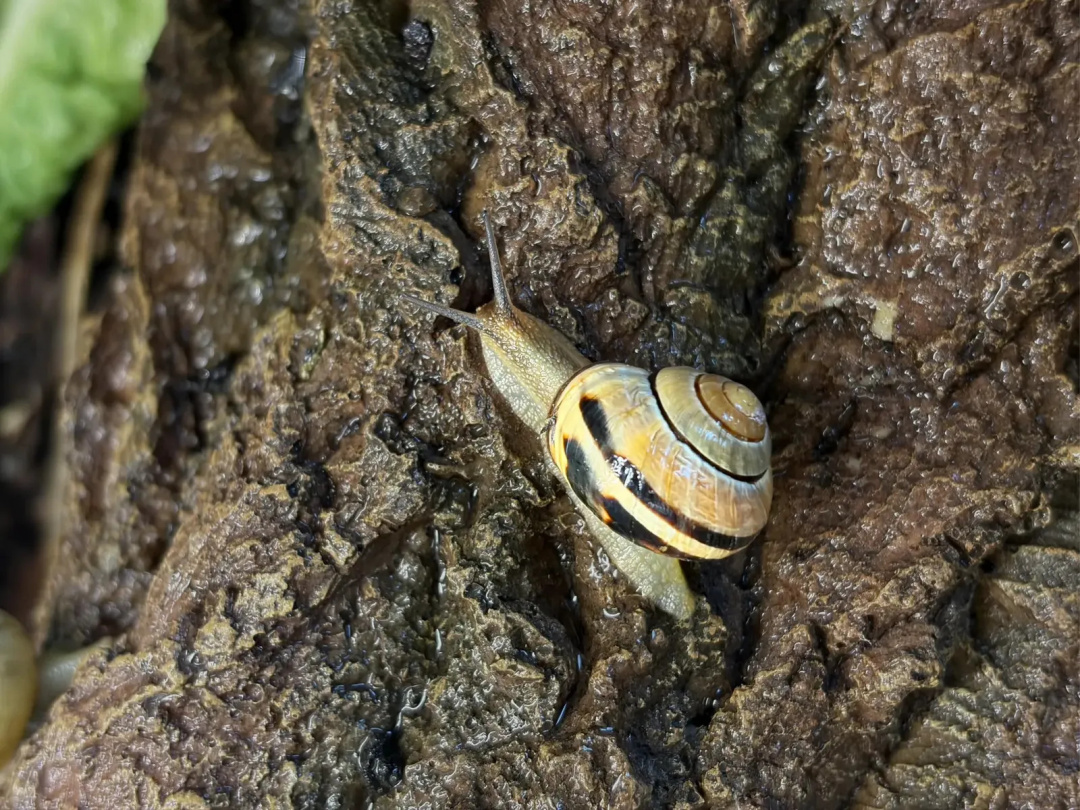
Snails are well-known for their slime, which they leave behind as they move. However, this mucus serves multiple purposes beyond just creating a mess. Recent research has revealed that land snails can adjust the texture of their mucus—making it slippery, sticky, foamy, or hard—based on their specific needs. This study, published on August 6 in the journal Science, provides insight into the biochemical manipulation of snail mucus, a versatile material that could inspire new applications in materials science.
The research team, led by Franziska Jehle from the Max Planck Institute of Colloids and Interfaces in Germany, collected brown-lipped snails during rainy days in Germany. They placed the snails in various scenarios to prompt the production of different types of mucus. For instance, when allowed to roam in a glass bowl, the snails produced a slick, lubricant mucus. In contrast, when gently detached from terrarium walls, they secreted a sticky, adhesive mucus. Additionally, the researchers observed two types of defensive slime—one foamy and another thick and yellow—when the snails were prodded. They also collected hardened mucus membranes, known as epiphragms, which snails use to seal their shells during hibernation.
Analysis of the molecular structure of these mucus varieties showed that they are composed of similar proteins, but the proportions vary depending on the intended function. For example, the lubricant mucus contains only 0.3 percent protein, while the thick, yellow defensive mucus has about 4 percent protein. The primary structural protein identified in the mucus is collagen VI, which is also significant in human skin, bones, and joints.
The study also revealed that the calcium content in the mucus varies according to its type. Higher levels of collagen and calcium contribute to stiffer, more cohesive, and sticky mucus. Calcium ions, which are electrically charged atoms, interact with the proteins in the mucus, affecting its density. The snails store calcium as granules of calcium carbonate in their mucus-secreting tissue, allowing them to add calcium as needed for different mucus types.
Experts in the field have noted the broader implications of this research. Victor Ajisafe, a biomaterials scientist at the University of Texas at El Paso, highlighted that while calcium is typically associated with hard tissues like shells and bones, this study illustrates its diverse functional roles in snail mucus. Ali Miserez, a biomaterials researcher at Nanyang Technological University, emphasized how the findings demonstrate the optimization of resources by living organisms, suggesting that the principles learned from snail mucus could inform the development of various materials, including adhesives and lubricants.
The versatility of natural materials, as exemplified by snail mucus, underscores the potential for creating environmentally friendly products that could be used in medical applications, such as wound healing or drug delivery. Peter Fratzl, another co-author of the study, remarked on the importance of understanding how living organisms utilize a limited number of building blocks to achieve a wide array of functions. This research not only sheds light on the fascinating adaptations of snails but also opens avenues for sustainable material development inspired by nature's ingenuity.