Heligmosomoides polygyrus Secretions Impair Dendritic Cell Activation
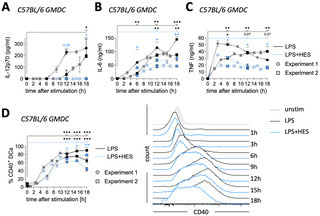
Dendritic cells (DCs) are essential antigen-presenting cells that activate adaptive immune responses by recognizing pathogens. However, many pathogens, including helminth parasites, have evolved mechanisms to evade immune detection. A recent study focused on the intestinal helminth Heligmosomoides polygyrus, which is known to manipulate DC responses to dampen immunity. The research demonstrated that the excretory/secretory (ES) products of H. polygyrus significantly repress the ability of both murine and human DCs to respond to canonical stimuli through Toll-like receptors (TLRs). Specifically, these secretions inhibited the production of pro-inflammatory cytokines such as IL-6 and IL-12p70, crucial for initiating immune responses. The study found that H. polygyrus ES (HES) blocks the upregulation of costimulatory molecules CD40, CD80, and CD86 in response to TLR ligands like lipopolysaccharide (LPS). Notably, the inhibition of DC activation was mediated independently of TGF-β signaling, despite HES containing a mimic of this host cytokine. This suggests a complex mechanism by which H. polygyrus interferes with DC function, affecting the host's ability to mount an effective immune response. The findings indicate that while HES does not interfere with the initial activation of DCs, it disrupts the maintenance of their activation and the subsequent inflammatory response, particularly impacting IL-12 production. This modulation of DC function by helminth secretions provides insights into how these parasites can evade host immunity and may have broader implications for understanding immune regulation in metabolic health contexts. The study highlights the sophisticated strategies employed by helminths to manipulate host immune responses, which could inform future research on immune-related diseases and therapies.














