Addressing the Multi-Omics Fallacy in Microbiome Research
Artificial intelligence and machine-learning-assisted multi-omics have significantly expanded the scale and ambition of microbiome research. However, these advancements have also brought to light an interpretive challenge known as the 'multi-omics fallacy.' This term refers to the tendency to mistake biologically plausible structures for actual biological explanations. In this Perspective, the author, Rebecca Lewandowski, outlines how integrating various data types—such as microbial, host, environmental, spatial, and clinical information—can lead to inflated claims about biological mechanisms without the necessary empirical support.
The multi-omics fallacy arises when computational models are granted mechanistic authority prematurely. Predictions, imputations, and inferred pathways can appear to provide biological explanations before their validity has been established through direct measurement or functional validation. In microbiome science, where indirect measurements like stool readouts and taxonomic abundances are often used as proxies for host-microbial interactions, this issue can lead to uncertain claims being presented as definitive.
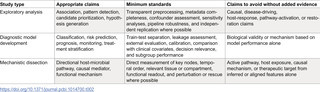
Lewandowski proposes a framework that distinguishes between prediction and explanation, emphasizing the importance of a model-to-mechanism burden of proof. This framework encourages researchers to clarify which computational outputs support classification or hypothesis generation and which require direct biological testing. By doing so, researchers can better expose uncertainties, prioritize experiments, and refine biological questions.
The author illustrates the risks associated with computational integration through examples in microbiome research, such as studies on resistance to Clostridioides difficile and personalized nutrition. In these cases, stronger claims were made only after linking computational predictions to empirical evidence, demonstrating the necessity of rigorous validation.
The multi-omics fallacy is not a critique of using multiple molecular layers or rejecting computational integration; rather, it is a caution against treating cross-layer agreement as mechanistic progress without corresponding gains in measurement and validation. The author stresses that exploratory studies can identify structures and prioritize candidates without overstepping into causal explanations.
Moreover, Lewandowski highlights the importance of distinguishing between various types of computational outputs, such as predictions, imputations, and attributions, and their respective evidentiary statuses. This distinction is crucial in avoiding the 'assumption laundering' phenomenon, where uncertain premises within computational workflows are misrepresented as findings.
In conclusion, while multi-omics approaches hold great potential for advancing microbiome science, it is essential to maintain a clear boundary between computational outputs and biological claims. By adhering to rigorous standards of evidence and validation, researchers can harness the power of computational methods while ensuring that their conclusions are grounded in solid biological reality.