Study Evaluates Appendicular-to-Trunk Lean Mass Ratio in Relation to Metabolic Syndrome
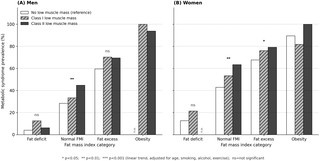
A study published in PLOS One investigates whether the appendicular-to-trunk lean mass ratio (ALM/TLM) can resolve the height-based normalization paradox in assessing low muscle mass and its implications for metabolic syndrome (MetS). This research is particularly relevant given that traditional height-based normalization indices for appendicular lean mass (ALM) may be influenced by adiposity, leading to uncertainty in their metabolic neutrality. The study utilized data from the Korea National Health and Nutrition Examination Survey (KNHANES) conducted between 2008 and 2010, focusing on a sample of 3,176 adults aged 65 and older. The researchers aimed to evaluate the relationship between ALM/TLM and metabolic health outcomes, specifically MetS, which is characterized by a cluster of conditions that increase the risk of heart disease, stroke, and diabetes.
The study's findings indicate that while the appendicular skeletal muscle mass index (ASMI), calculated as ALM divided by height squared, positively correlates with fat mass index (FMI), the ALM/TLM ratio shows a negative correlation with FMI. This suggests that ASMI may reflect body size and adiposity rather than solely muscle depletion, complicating its interpretation in terms of metabolic risk. In contrast, the ALM/TLM-defined low muscle mass consistently demonstrated positive associations with MetS across different adiposity levels, supporting the need for further evaluation of this normalization method. The study's results highlight the importance of considering how muscle mass is normalized when assessing metabolic health, particularly in older populations.
The research also established sex-specific cut-off values for low muscle mass based on the young adult reference group, revealing significant differences in the prevalence of low muscle mass between men and women. The implications of these findings are substantial, as they suggest that the ALM/TLM ratio may provide a more accurate reflection of metabolic health than traditional height-based indices. However, the authors caution that while ALM/TLM shows promise, its clinical validity remains to be fully established. The study underscores the complexity of assessing muscle mass and its relationship to metabolic health, particularly in older adults, and calls for further research to validate these findings and explore their potential applications in clinical practice.