Study Reveals Mechanical Defects in Aged Mouse Embryos Impacting Implantation Success
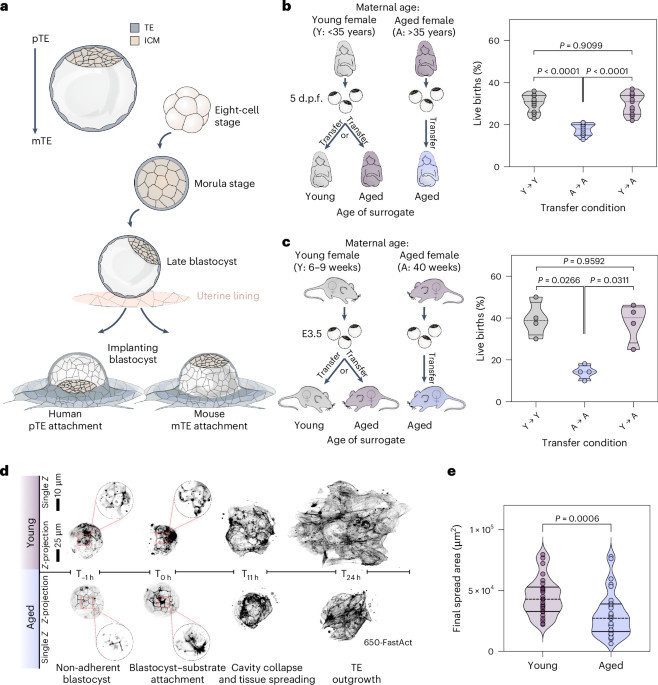
A recent study has shed light on the challenges faced by embryos from aged females, particularly concerning their implantation capacity. As women age, especially into their mid-30s, fertility declines significantly, and this research identifies a core mechanical defect in embryos that contributes to this issue. The study, conducted by Cavanaugh et al., utilized mouse models to explore how reproductive aging leads to excessive contractility in the trophectoderm, the outer layer of the embryo that plays a crucial role in implantation. This hypercontractility increases the surface tension and viscosity of the blastocyst tissue, which ultimately hinders its ability to spread and attach effectively during implantation. The findings suggest that elevated contractility is both a necessary and sufficient condition for the implantation failures observed in older embryos. Furthermore, the researchers have identified non-invasive imaging techniques that can infer the mechanical properties of embryos, potentially predicting implantation success for both young and older females. The implications of this study extend beyond mouse models, as analyses of human embryos and clinical data from in vitro fertilization (IVF) reveal similar age-associated mechanical alterations that correlate with implantation potential. This research underscores the importance of embryo mechanics as a key factor in reproductive longevity, providing insights that could inform future fertility treatments and interventions for women facing age-related reproductive challenges.