Proteomic Changes in Intestinal Cells During Repeated Trematode Infections in Mice
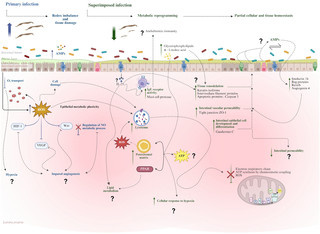
A recent study published in PLOS Neglected Tropical Diseases explores the impact of repeated intestinal worm infections on the cells lining the small intestine in mice. Researchers focused on the effects of Echinostoma caproni infections, which are known to disrupt the gut's normal balance, leading to tissue damage and altered metabolic processes. The study employed a proteomics approach to analyze changes in protein expression in ileal epithelial cells during both primary and homologous superimposed infections.
The findings indicate that the first infection induces significant cellular stress, impairing oxygen utilization and hindering the activity of pathways responsible for tissue repair. However, upon repeated infection, the epithelial cells exhibit a remarkable coordinated response that restores many of their cellular functions. Notably, the cells enhance protein activity related to lipid metabolism, structural integrity, and antimicrobial defense, suggesting an adaptive mechanism to limit tissue damage and promote resilience against parasites.
Central to these protective adaptations is interleukin-25 (IL-25), an immune signaling molecule that appears to orchestrate the metabolic and structural reorganization of the gut epithelium. The study provides a detailed proteomic framework for understanding how repeated exposure to helminths can drive partial resistance, highlighting the importance of IL-25 in linking metabolic reprogramming with epithelial integrity and immune responses.
This research sheds light on the complex host responses to intestinal helminth infections, emphasizing the potential for the gut epithelium to adapt through metabolic and structural changes. Such insights could inform future strategies for managing helminth infections and improving gut health.