Greenland Sharks: Longevity and Eye Health Insights from a New Study
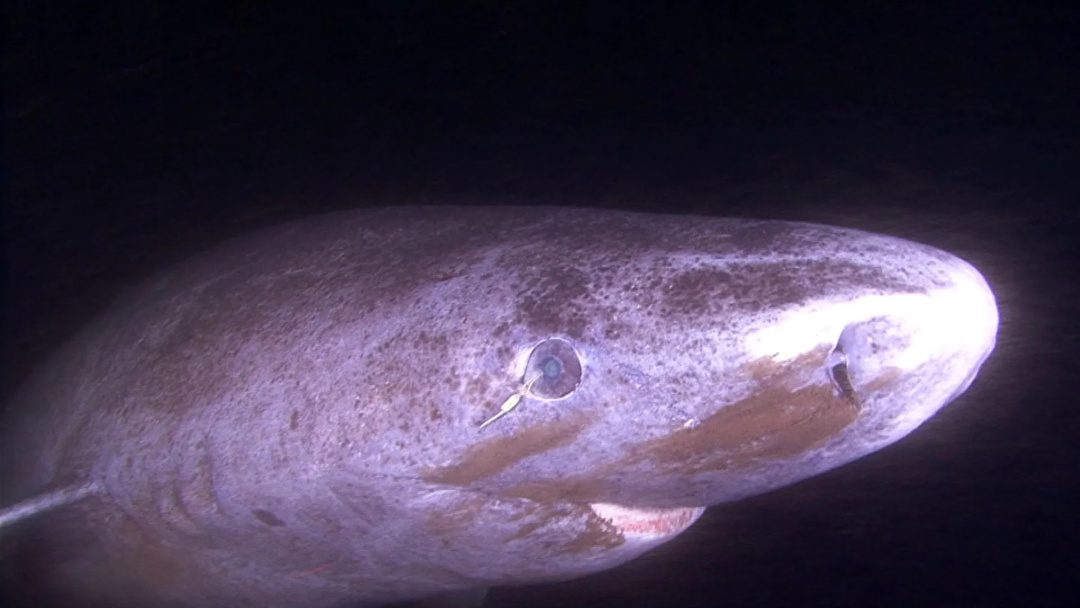
Dorota Skowronska-Krawczyk, an associate professor of physiology and biophysics at the University of California, Irvine, has been studying Greenland sharks, which glide through the dark Arctic waters and are known to be the longest-living vertebrates, with some individuals surviving for as long as 400 years. These sharks have thick gray bodies and small heads, with eyes that often appear cloudy and lifeless, frequently hosting parasites. Historically, scientists have suspected that these sharks might be functionally blind due to their environment and the presence of parasites. However, new research led by Skowronska-Krawczyk challenges this notion. The study, co-authored by researchers from the University of Basel, Switzerland, suggests that a unique DNA repair mechanism may allow these sharks to maintain their eyesight for centuries without showing signs of retinal degeneration. The findings, published in Nature Communications, indicate that the visual systems of Greenland sharks are specially adapted to the extremely low light levels in their Arctic habitat. Skowronska-Krawczyk's interest in the sharks was sparked by a 2016 research paper by John Fleng Steffensen, which noted the presence of parasites on the sharks' eyes. This led her to investigate further, as she observed that the sharks actively move their eyes toward light. The sharks examined in the study were caught between 2020 and 2024 near the University of Copenhagen's Arctic Station on Disko Island, Greenland. The research team, including marine biology professor Steffensen and others, dissected the sharks' eyes for analysis. Emily Tom, a Ph.D. student at UC Irvine, described the experience of handling a preserved eye from a 200-year-old shark, noting the challenges of working with such large samples compared to typical lab specimens. The researchers conducted histological and vision-specific analyses and found no evidence of cell death in the retina. They also discovered that rhodopsin, a protein crucial for vision in dim light, remained active in the shark retina, adapted to detect blue light. This adaptation is significant for survival in the faint light of deep Arctic waters. The results suggest that the Greenland shark's remarkable lifespan does not correlate with severe retinal deterioration, which is typically expected in aging animals. Skowronska-Krawczyk believes that understanding how these sharks maintain healthy eyes for centuries could lead to new strategies for preventing age-related vision loss in humans. The findings may also inform research into eye diseases such as macular degeneration and glaucoma, while raising broader questions about the evolution of vision and the longevity of functional tissues. Despite concerns about federal research funding, Skowronska-Krawczyk remains optimistic about the future of this important research.