Study Reveals Age-Related Changes in Metabolic Dysfunction-Associated Liver Disease
A recent study published in PLOS One investigates the age-related molecular changes associated with metabolic dysfunction-associated steatotic liver disease (MASLD). This condition, which has become a significant public health concern, particularly among older adults, is characterized by a complex interplay of metabolic dysfunction and liver health. The research aims to determine whether the molecular changes observed in MASLD are simply an acceleration of normal aging processes or if they represent distinct disease-specific alterations.
The study utilized public transcriptomic data from both normal liver and MASLD samples to identify differential gene expression patterns. By employing advanced statistical methods, including Spearman correlation analysis and generalized additive models (GAM), the researchers were able to model the nonlinear trajectories of gene expression related to aging. This comprehensive analysis included data from 1,354 liver transcriptome samples sourced from the Gene Expression Omnibus (GEO) and the Genotype-Tissue Expression (GTEx) databases.
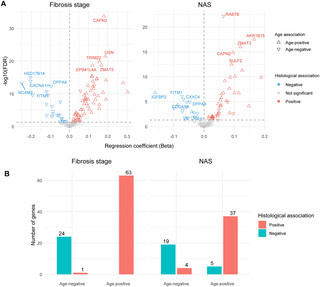
Findings from the study revealed that there is minimal overlap in age-associated gene expression between MASLD and healthy controls, with only 22 genes showing common trends. Notably, some genes exhibited opposite age-related trends in MASLD compared to normal liver aging. The GAM analysis identified four major expression patterns in MASLD, indicating significant changes at approximately ages 35 and 75. Functional enrichment analysis further suggested that the age-related changes in MASLD are primarily linked to disruptions in protein homeostasis and stress response pathways, rather than the typical processes associated with physiological aging.
The implications of these findings are substantial, as they suggest that MASLD is characterized by specific transcriptional remodeling that diverges from normal liver aging. This understanding is critical for developing targeted interventions and clinical strategies that consider the unique molecular landscape of MASLD as individuals age. The study underscores the need for further research to explore these molecular trajectories and their clinical relevance, particularly in older populations who are at greater risk for adverse outcomes related to MASLD.
In conclusion, this research contributes to the growing body of knowledge surrounding MASLD and its relationship with aging, highlighting the importance of distinguishing between normal aging processes and disease-specific changes. As the prevalence of MASLD continues to rise globally, understanding these molecular dynamics will be essential for improving patient outcomes and tailoring therapeutic approaches.