Caveolin-1 Identified as Key Factor in Bacillus cereus Hemolysin BL Toxin Cytotoxicity
Hemolysin BL (HBL) is a significant virulence factor produced by Bacillus cereus, a bacterium known for causing foodborne illnesses and severe infections. Recent research has uncovered the role of caveolin-1 (CAV1) as a crucial host factor that mediates the cytotoxic effects of HBL. Previously, LITAF and CDIP1 were identified as receptors that facilitate the toxin's action; however, the absence of both only offered partial protection against HBL toxicity in experimental models. This finding prompted researchers to investigate additional host factors that might contribute to susceptibility.
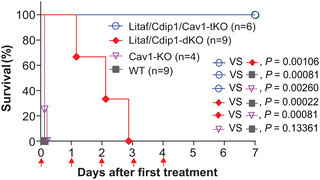
Utilizing genome-wide CRISPR knockout screens in mouse embryonic fibroblasts and human cell lines deficient in LITAF and CDIP1, the study identified CAV1 as a conserved factor essential for HBL's cytolytic activity. The researchers conducted confocal imaging and co-immunoprecipitation analyses, revealing that CAV1 not only colocalizes with HBL but also physically associates with the toxin at the plasma membrane. This interaction is critical, as mice lacking all three factors—LITAF, CDIP1, and CAV1—exhibited complete resistance to HBL toxin challenges, underscoring the importance of CAV1 in the pathogenesis of B. cereus.
The study's findings establish a tripartite receptor system necessary for HBL's cytotoxic effects, positioning CAV1 as a vital component in the virulence of Bacillus cereus. This research not only enhances our understanding of the mechanisms behind B. cereus toxicity but also opens potential pathways for therapeutic interventions aimed at mitigating the effects of this pathogen. The implications of these findings could extend to broader discussions on metabolic health, particularly in understanding how bacterial toxins interact with host cellular mechanisms.














