Nutrient Availability and Microbiome Influence on Jellyfish Regeneration
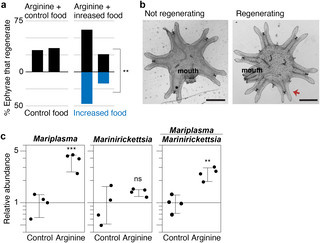
The moon jellyfish, Aurelia coerulea, typically does not regenerate its appendages. However, a previous study indicated that increasing nutrient availability can activate this regeneration process. In a recent investigation, researchers explored how variations in nutrient levels influence the microbiome composition of these jellyfish and, consequently, their regenerative abilities. The study revealed that nutrient availability significantly alters the microbiome, which in turn affects the jellyfish's capacity to regenerate. Specifically, genome-scale metabolic modeling of the microbial symbionts suggested that changes in microbiome composition reduce the abundance of certain symbionts that compete with the host for metabolic resources. Notably, antibiotic treatment that mimicked the microbiome shift significantly promoted regeneration in the jellyfish. Transcriptomic analysis indicated an upregulation of genes related to the arginine biosynthetic pathway, including argininosuccinate synthase and carbamoyl phosphate synthase. Furthermore, the addition of exogenous arginine was found to enhance appendage regeneration. These findings underscore the intricate relationship between microbiome composition, nutrient availability, and the activation of regenerative processes in Aurelia coerulea, highlighting the potential role of arginine in promoting regeneration. This study not only contributes to our understanding of jellyfish biology but also raises questions about the broader implications of nutrient-microbiome interactions in regeneration across different species.