Study Links Dollar Store Grocery Quality to Increased Health Risks

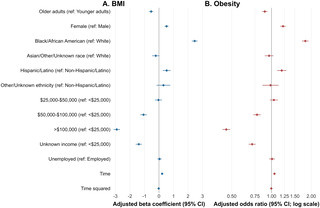
A recent study from the University of California, Riverside reveals that while shopping at dollar stores may save consumers money, it could lead to significant health costs. The research establishes a connection between the quality of food available at dollar stores and increased rates of obesity, high blood pressure, cholesterol, and type 2 diabetes. In contrast, access to traditional grocery stores is linked to better health outcomes. This study, published in BMC Public Health, analyzed data from the Centers for Disease Control and Prevention’s 500 Cities Project, which encompasses major metropolitan areas across the United States, including regions like greater Los Angeles and the Inland Empire.
The research specifically looked at well-known dollar store chains such as Dollar General, Dollar Tree, the 99 Cent Store, and Family Dollar, which collectively operate around 34,000 locations nationwide. Ryan Bruellman, a doctoral student in genetics, genomics, and bioinformatics at UCR and the study's lead author, emphasizes that the prevalence of dollar stores is significant, with more locations than traditional grocery stores in many regions.
Using geographic information system (GIS) software, Bruellman mapped the proximity of these dollar stores to residential areas, factoring in a social vulnerability index that measures the challenges people face in affording groceries. The findings indicated that while dollar stores are widespread, their impact on health varies by region. In the South and Midwest, for instance, the ratio of dollar stores to traditional grocery stores is approximately equal, suggesting a stronger influence on consumer health in those areas.
The study also notes that the health effects are not uniform across all cities. For example, in Philadelphia, the presence of smaller independent grocery stores may mitigate the negative impacts associated with dollar store shopping. Bruellman points out that the fundamental issue lies in the quality of food offered at dollar stores rather than its price. He advocates for solutions that could enhance food quality, such as partnerships with local farmers to provide fresh produce.
Bruellman believes that improving access to healthier food options within dollar stores could significantly benefit communities. He suggests that cities could also facilitate the establishment of farmers markets and food banks closer to these stores, thereby increasing access to nutritious foods for residents.
Ultimately, Bruellman hopes that this research will prompt lawmakers and policymakers to consider broader food access strategies, emphasizing that traditional grocery stores should not be viewed as the sole source of food. The study calls for a rethinking of food access in communities, encouraging a more diverse approach to where and how people obtain their groceries.