New Insights into cGAS Activation Mechanisms Following DNA Damage
The study conducted by Lebrec et al. focuses on the activation of cGAS, a crucial sensor in the innate immune system that detects double-stranded DNA (dsDNA) and triggers inflammatory responses. When cGAS binds to DNA, it produces cGAMP, which activates downstream signaling pathways leading to inflammation. Traditionally, it was believed that cGAS activation during genotoxic stress was primarily mediated by structures like micronuclei and chromosome bridges. However, the mechanisms behind this activation have remained poorly understood due to the lack of sensitive assays to measure cGAS activation at the single-cell level.
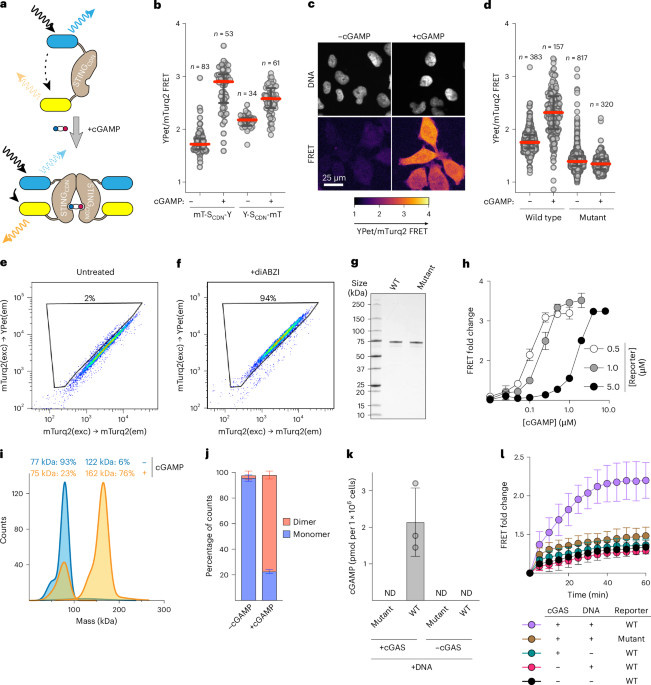
To address this gap, the researchers developed an improved Förster resonance energy transfer (FRET)-based reporter that allows for real-time monitoring of cGAS activation. This innovative tool enables the detection of cGAMP production in individual cells, providing insights into the kinetics of cGAS activation following genotoxic stress. The study found that cGAS activation is not only rare but also occurs through mechanisms that vary depending on the type of genotoxic stress encountered. For instance, while cGAS activation was associated with chromosome bridges following chromosome mis-segregation, it was shown to occur independently of these structures when cells were exposed to ionizing radiation.
The research also highlights the role of more complex DNA:RNA hybrid structures, specifically R-loops, in activating cGAS. Simple DNA:RNA hybrids were found to be inert, whereas R-loops triggered cGAS activation, suggesting a nuanced understanding of the conditions under which cGAS is activated during DNA damage.
This study revises the existing cGAS signaling framework and introduces a flexible tool that can be utilized in various experimental settings to further explore cGAS activation mechanisms. The implications of these findings extend beyond basic science, as they may inform therapeutic strategies targeting immune responses in conditions characterized by DNA damage and chromosomal instability.














