Indonesia and FAO Unveil 2026-2030 Framework for Sustainable Agrifood Systems
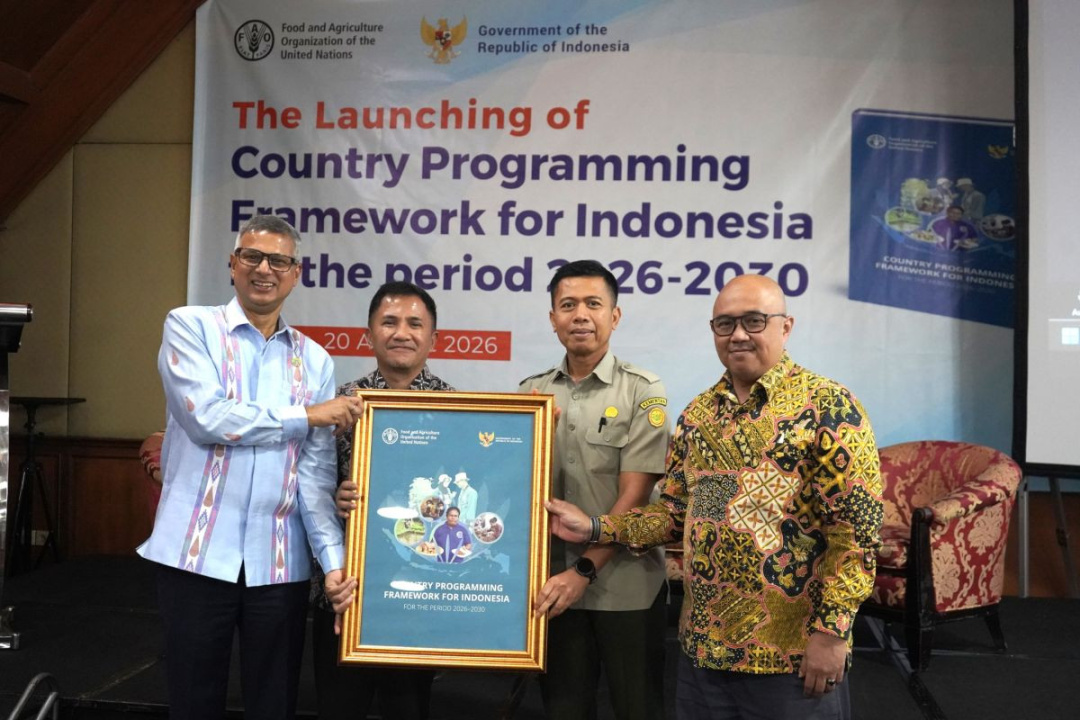
On August 20, 2026, the Indonesian government and the Food and Agriculture Organization of the United Nations (FAO) officially launched the 2026-2030 Country Programming Framework (CPF) in Jakarta. This framework is designed to accelerate the transition toward sustainable agrifood systems in Indonesia. Leonardo Adypurnama Alias Teguh Sambodo, Deputy for Food, Natural Resources, and Environmental Affairs at the Ministry of National Development Planning, emphasized that the CPF aligns with the 2025-2029 National Medium-Term Development Plan (RPJMN). He stated, "The 2026-2030 CPF outlines FAO support across key areas to transform our agrifood systems, build climate resilience, and strengthen risk adaptation, which will bolster our foundation for long-term growth." The CPF serves as a five-year cooperation framework focusing on building sustainable, resilient, and inclusive food and agricultural systems. It identifies three main areas of collaboration: the transformation toward sustainable and inclusive agrifood systems; biodiversity conservation and sustainable natural resource management; and strengthening integrated, risk-responsive systems through a One Health approach. Additionally, it sets four key targets: better production, better nutrition, a better environment, and a better life for all, ensuring that no one is left behind, in alignment with national and global development goals. Agriculture Ministry Secretary-General Suwandi expressed hope that the partnership with the FAO would evolve into a two-way collaboration, facilitating knowledge and experience sharing. The CPF is also aligned with the Sustainable Development Goals (SDGs) and the United Nations Sustainable Development Cooperation Framework (UNSDCF) for 2026-2030. FAO Representative for Indonesia and Timor-Leste, Rajendra Aryal, highlighted that the CPF was designed with a holistic perspective, considering the interconnections between agriculture, food and nutrition security, natural resource management, climate action, social protection, health, and economic development. This approach is crucial for addressing the complex challenges facing Indonesia's agrifood systems. The FAO has noted that Indonesia grapples with several challenges, including climate change, unequal access to healthy diets, and persistent poverty among farmers, particularly smallholder farmers. According to the State of Food Security and Nutrition in the World 2026 report, approximately 68.6 percent of Indonesia’s population is unable to afford a healthy diet as of 2025. The CPF aims to mobilize investments for agrifood system transformation through budgeting, blended finance, co-investment, and private sector engagement, ultimately strengthening food and nutrition security and promoting sustainable growth within Indonesia's agrifood systems.