Ancient Microbial Life Evidence Dated to 3.5 Billion Years Ago
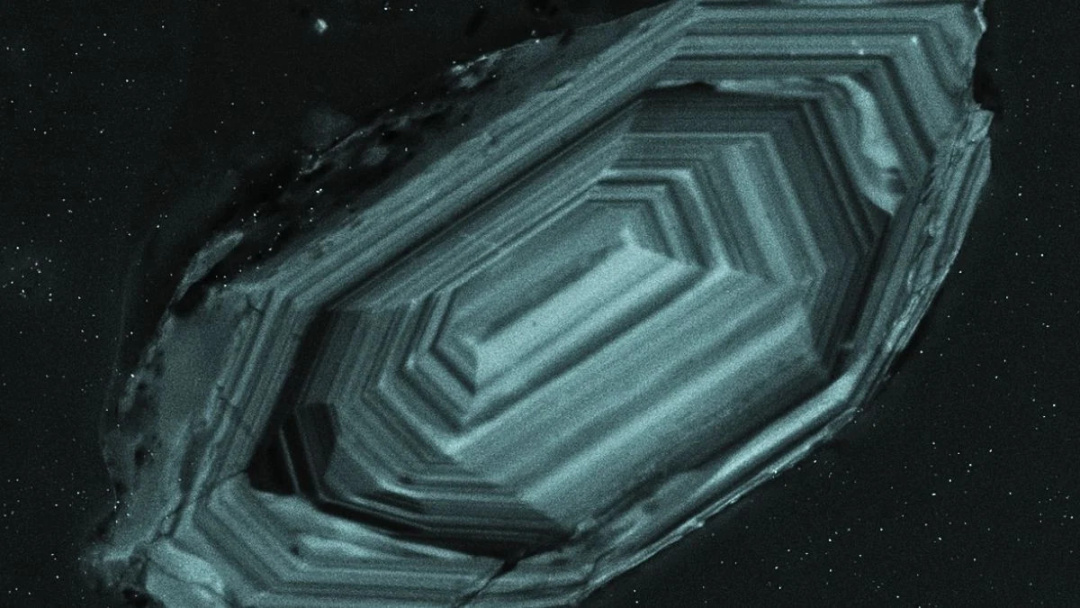
In a groundbreaking discovery, a team of scientists led by geologist Trisrota Chaudhuri from the Geological Survey of India has dated remnants of ancient microbial life to 3.5 billion years ago. This significant finding provides direct evidence of early life on Earth, linking biological material to its geological context. The research centers on ancient stone formations where fossilized microbial mats, which are slimy biofilms housing single-celled organisms, can be found. Previous studies have suggested that some traces of life date back to 3.7 or 3.8 billion years ago, but this new research offers a more precise dating method.
Chaudhuri's team discovered a carbonaceous layer within an ancient striped chert in the Singhbhum Craton, one of the oldest surviving blocks of continental crust. The identification of well-preserved biological material alongside datable zircon crystals is rare in the early history of Earth. The researchers utilized Raman spectroscopy to analyze the carbon's structure, revealing that it had experienced temperatures between 324 and 369 degrees Celsius, which is conducive to preserving biological signatures. Additionally, the carbon isotopes showed a depletion in carbon-13, indicating a biological origin consistent with ancient microbial life.
The dating process involved analyzing zircon crystals embedded within the carbon-bearing rock. Zircon, known for its precise dating capabilities, allows scientists to estimate when the crystals formed based on the ratio of uranium to lead within them. The researchers found that four of the eight zircon crystals analyzed provided matching ages clustered around 3.5 billion years, confirming the age of the microbial evidence. This discovery not only sheds light on the timeline of early life but also emphasizes the conditions in which these microorganisms thrived.
Chaudhuri noted that this finding is crucial for understanding when life emerged on Earth and how early environments supported it. The research indicates that primitive life existed in a chemically extreme world alongside active volcanism, challenging previous notions of a tranquil early Earth. The study highlights that microbial ecosystems were already adapting to dynamic volcanic environments remarkably early in Earth's history. The findings have been published in the Proceedings of the National Academy of Sciences, marking a significant advancement in our understanding of life's origins on our planet.














