Exercise-Related Genes Influence Immune Response and Prognosis in Hepatocellular Carcinoma
Recent research has shed light on the intricate relationship between exercise-related genes (ERGs) and their implications in hepatocellular carcinoma (HCC), a leading cause of cancer-related deaths worldwide. The study integrated 320 ERGs from the Molecular Signatures Database (MSigDB) with data from the Cancer Genome Atlas (TCGA) HCC cohort to construct a detailed interaction-perturbation network. This analysis revealed two distinct subtypes of HCC, each associated with different prognostic outcomes.
Cluster 1, comprising 44.4% of patients, exhibited significantly higher network perturbation scores, indicating activated proliferation pathways and elevated immune checkpoint gene expression. This subtype was linked to poorer survival rates and demonstrated enhanced immune evasion potential, suggesting lower predicted responses to immunotherapy. In contrast, Cluster 2, which included 55.6% of patients, was characterized by metabolic pathway enrichment and a higher tumor mutational burden, indicating a more favorable immunotherapy prediction.
The study also highlighted the role of the intratumoral microbiota, particularly the genus Streptomyces, which was found to be significantly associated with immune exclusion features. The researchers conducted mediation analysis, revealing that elevated lactate metabolism was statistically associated with adaptive microbial changes, which in turn were linked to exercise-related pathway activity and clinical outcomes.
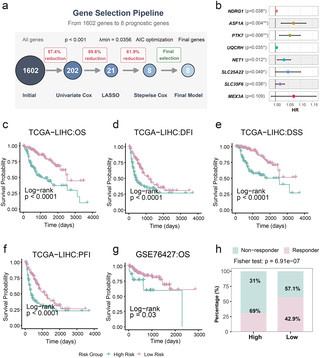
To further understand these dynamics, the researchers developed an 8-gene prognostic signature based on Streptomyces-associated host genes. This signature effectively stratified patient outcomes and predicted immunotherapy responses across multiple independent cohorts. The findings of this study emphasize the importance of understanding the molecular subtypes of HCC and their interactions with the immune microenvironment and microbiota, paving the way for personalized treatment strategies in HCC management.
The implications of this research are significant, as they not only enhance our understanding of HCC biology but also provide a framework for developing reliable biomarkers that could improve patient stratification and treatment efficacy in the context of immunotherapy. As HCC continues to pose a major challenge in oncology, the insights gained from this study may contribute to more effective therapeutic approaches and improved patient outcomes.