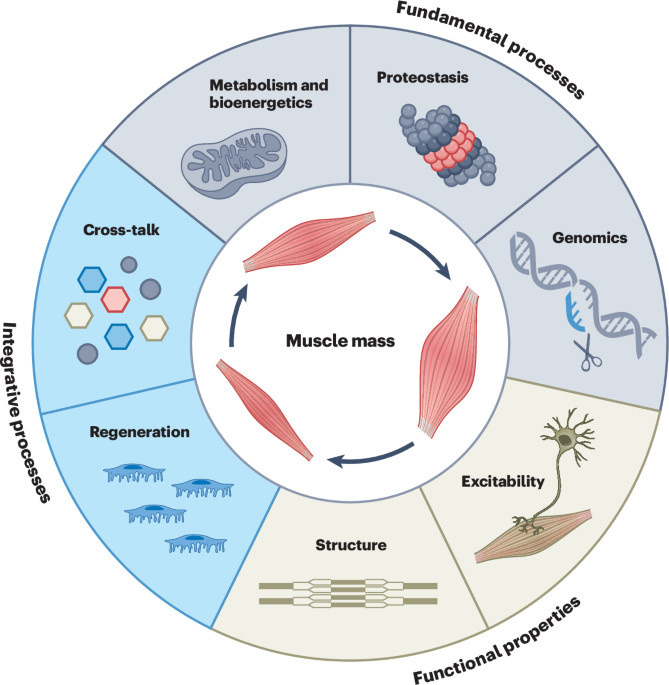
Defining Seven Hallmarks of Skeletal Muscle Health for Metabolic Well-Being
Skeletal muscle is a critical component of overall health, playing a significant role in regulating metabolism and preventing various diseases. A recent review published in Nature outlines a comprehensive framework that defines seven interconnected hallmarks of skeletal muscle health: metabolism and bioenergetics, proteostasis, genomics, excitability, structure, regeneration, and inter-organ cross-talk. Each hallmark is essential for maintaining muscle integrity, adaptability, and resilience throughout an individual's lifespan. The review emphasizes that preserving muscle quality is vital for sustaining quality of life and mitigating the risks associated with muscle deterioration. The authors argue that a unifying framework is necessary to better understand and measure muscle health, which can lead to the development of targeted therapies and precision diagnostics. Each hallmark is not only grounded in mechanistic understanding but is also quantifiable and potentially modifiable, suggesting that interventions could be designed to enhance muscle health. For instance, metabolism and bioenergetics focus on how energy production and utilization in muscle cells affect overall metabolic health. Proteostasis refers to the balance of protein synthesis and degradation, which is crucial for muscle maintenance. Genomics highlights the genetic factors that influence muscle health, while excitability pertains to the muscle's ability to respond to stimuli. Structure examines the physical characteristics of muscle tissue, and regeneration addresses the muscle's capacity to repair and grow. Finally, inter-organ cross-talk emphasizes the communication between skeletal muscle and other organs, which plays a significant role in metabolic regulation. By focusing on these hallmarks, researchers and healthcare professionals can gain insights into how to measure and improve muscle health, ultimately leading to better metabolic outcomes. This framework not only underscores the importance of muscle in health but also opens potential pathways for intervention in conditions related to muscle loss and metabolic dysfunction.














