Genistein's Interaction with Endothelial Activation Index and ASCVD Risk
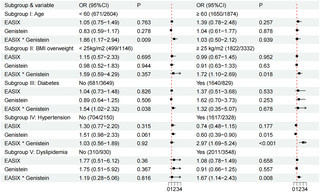
A recent study published in PLoS One investigates the interaction between urinary genistein and the Endothelial Activation and Stress Index (EASIX) concerning the estimated 10-year risk of atherosclerotic cardiovascular disease (ASCVD). EASIX has been proposed as a potential marker for endothelial stress, which is crucial in understanding cardiovascular health. The study utilized data from the National Health and Nutrition Examination Survey (NHANES) to analyze the relationship between EASIX and ASCVD risk, particularly focusing on how urinary genistein might modify this association.
The researchers conducted a multivariable logistic regression analysis to assess the link between EASIX and ASCVD risk classification. They found that higher EASIX scores were independently associated with an increased risk of ASCVD, with an odds ratio of 1.407 per unit increase in EASIX (95% CI: 1.208–1.640; P < 0.001). Notably, a significant interaction was identified between EASIX and urinary genistein levels, suggesting that genistein may influence the relationship between EASIX and ASCVD risk. Specifically, the adverse association of EASIX with ASCVD risk was slightly less pronounced in individuals with higher urinary genistein levels (OR = 1.360; 95% CI: 1.066–1.736; P = 0.015) compared to those with lower levels (OR = 1.397; 95% CI: 1.202–1.624; P < 0.001).
The study's findings indicate that higher EASIX scores correlate with an elevated estimated 10-year ASCVD risk classification, and this relationship appears to vary based on urinary genistein concentrations. The researchers employed restricted cubic splines to evaluate potential dose-response relationships, revealing a non-linear association in the lower genistein group while a linear relationship was observed in the higher genistein group.
These results contribute to the understanding of endothelial dysfunction and its implications for cardiovascular health, especially regarding dietary factors like genistein, a soy isoflavone known for its anti-inflammatory properties. However, the authors caution that these findings should be interpreted as hypothesis-generating, necessitating further research to clarify the mechanisms involved and the potential role of genistein in cardiovascular risk management.
This study highlights the importance of considering dietary components in the assessment of cardiovascular disease risk, particularly as the global population ages and the burden of atherosclerotic cardiovascular disease increases. As such, the interaction between dietary factors and biomarkers like EASIX could provide valuable insights for future research and public health strategies aimed at reducing cardiovascular risk.