Study Reveals How Enzyme Kinetics Influence Bacterial Growth Responses
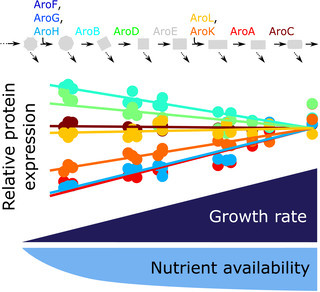
In a groundbreaking study published in PLOS Computational Biology, researchers have established a model that elucidates how enzyme kinetics shape the growth responses of metabolic networks in bacteria. This research is crucial for understanding how microbes adapt their metabolism to environmental challenges, such as nutrient limitations. The study reveals that bacteria can adjust their physiology through changes in protein expression levels, metabolite concentrations, and reaction rates. The model integrates local enzyme kinetics with the global architecture of metabolic networks, allowing for predictions about how proteins and metabolites respond to varying growth conditions.
Under conditions of nutrient limitation, the study predicts a simple yet significant pattern of proteome reallocation: protein expression levels change in a linear but heterogeneous manner. The direction of change for a given enzyme is influenced by its local kinetic constants—specifically its catalytic rate and substrate affinity—as well as the degree of nutrient restriction affecting its metabolic pathway. This dual influence leads to a nuanced understanding of how metabolic networks function under stress.
The researchers identified three specific growth laws from their model. They found that the expression changes of individual enzymes are negatively correlated with both their expression levels and substrate saturation at high growth rates. Additionally, average changes in pathways and larger functional sectors correlate with their internal variance. These findings align with empirical data from proteomics and metabolomics studies of E. coli, validating the model's predictions.
The implications of this research extend beyond basic science; understanding the plasticity of microbial metabolism could lead to advancements in medicine, synthetic biology, and the development of novel antimicrobials. By identifying key variables that dictate resource allocation to enzyme-substrate pairs, the study lays the groundwork for future investigations into metabolic engineering and the optimization of microbial communities.
Overall, this study not only enhances our understanding of bacterial growth responses but also sets the stage for regulatory and evolutionary analyses of metabolic networks, potentially guiding future interventions in microbial metabolism.














