Ivermectin's Impact on Parasitic Diseases: Strongyloides and River Blindness
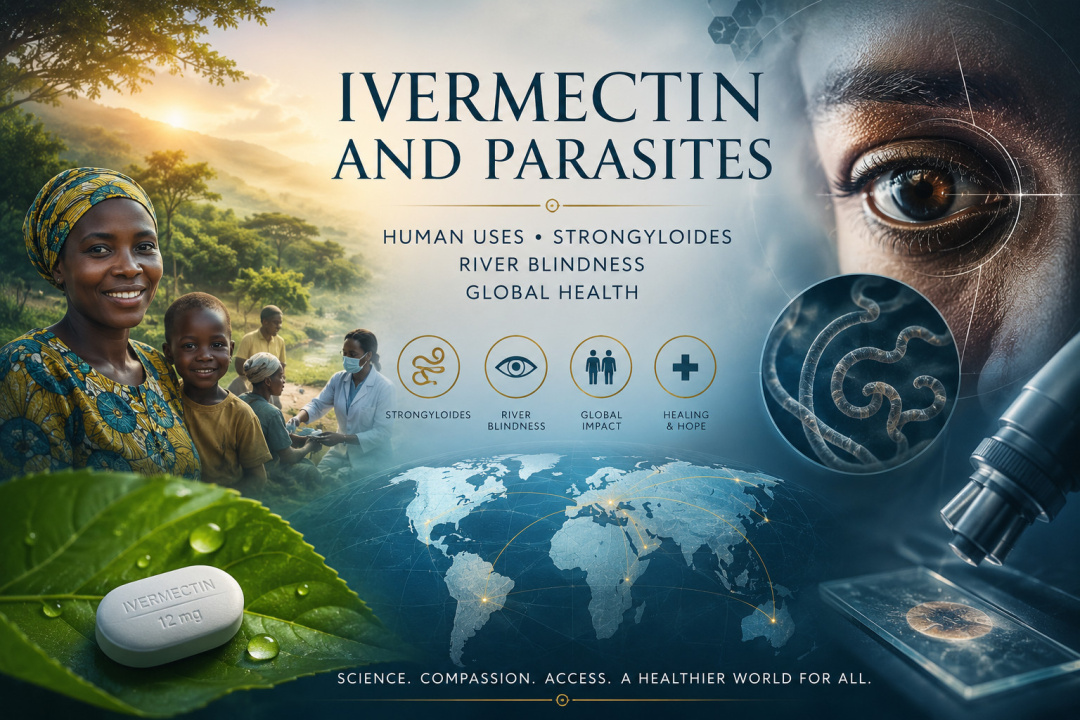
Ivermectin has significantly changed the landscape of parasitic disease treatment, particularly in cases like Strongyloides and river blindness. Before its modern applications in inflammation and immune signaling, ivermectin's primary role was as an antiparasitic agent. The complexity of parasites, which can affect various tissues and organs in the human body, underscores the importance of understanding their biology for effective treatment.
Parasites are not merely worms residing in the digestive tract; they encompass a wide range of organisms that can invade multiple systems. For instance, Strongyloides stercoralis can enter through the skin, migrate through the lungs, and ultimately establish itself in the intestines. This intricate life cycle illustrates how symptoms can manifest in different parts of the body, complicating diagnosis and treatment.
Ivermectin's effectiveness lies in its ability to disrupt the biological processes of certain parasites. It specifically targets glutamate-gated chloride channels, which are essential for the nervous and muscular functions of invertebrates. This selective action is crucial since it minimizes effects on human cells, allowing ivermectin to be a powerful tool against susceptible parasites.
The case of river blindness, caused by Onchocerca volvulus, exemplifies ivermectin's humanitarian impact. This disease, transmitted through blackfly bites, leads to severe visual impairment and social challenges in affected communities. Ivermectin not only reduces the parasite load in individuals but also diminishes the transmission potential to others, showcasing its dual benefit in public health.
Mass drug administration (MDA) strategies, where entire communities receive ivermectin treatment, have proven effective in interrupting the transmission cycle of river blindness. This approach has transformed communities, allowing them to move towards a future free from the burden of this disease.
In contrast, Strongyloides presents a unique challenge due to its ability to reinfect the host from within. This parasite can persist for years, complicating treatment strategies. Understanding the life cycle and biological characteristics of parasites like Strongyloides is essential for developing targeted therapies and improving health outcomes.
Overall, ivermectin's role in combating parasitic diseases highlights the intersection of biology, treatment, and public health, demonstrating that with proper understanding and intervention, persistent infections can be controlled and potentially eliminated.