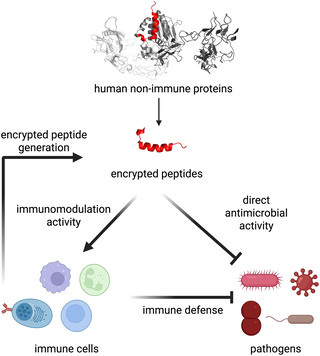
Exploring the Role of Encrypted Peptides in Immune Function and Health
Recent research has highlighted the significant role of encrypted peptides, which are short bioactive fragments hidden within larger proteins, in the immune system. These peptides, often fewer than 50 amino acids in length, have been found to contribute to host defense mechanisms not only through direct antimicrobial activity but also through immunomodulatory functions. The essay synthesizes findings from various studies that illustrate how these peptides are discovered and the biological logic behind their function in immunity.
Traditionally, the identification of these peptides was a labor-intensive process, requiring extensive fractionation and bioactivity testing. However, with advancements in computational methods and machine learning, researchers have been able to identify a broader array of encrypted peptides across different species, including humans. Many of these peptides originate from non-immune proteins, suggesting a complex interaction between various biological systems that contributes to immune responses. This phenomenon is encapsulated in the proposed 'cross-talk hypothesis,' which posits that non-immune proteins can engage with the immune system through their encrypted peptides, thereby enhancing host defense in ways that were previously unrecognized.
The essay further explores the implications of these findings for therapeutic and diagnostic applications. As the understanding of encrypted immunity expands, it raises important questions regarding the conditions under which these peptides are generated, the biological pathways involved, and their potential roles in various physiological processes beyond antimicrobial activity. The authors emphasize that while the computational tools have significantly advanced the discovery of these peptides, the biological questions surrounding their function and regulation remain crucial for future research.
In conclusion, the emerging field of encrypted immunity represents a promising area of study that could lead to novel therapeutic strategies and a deeper understanding of immune function. As researchers continue to unravel the complexities of these peptides, their potential contributions to health and disease will become increasingly important in the context of metabolic health and beyond.