Study Reveals Limited Regenerative Capacity of Bone Marrow Stromal Cells
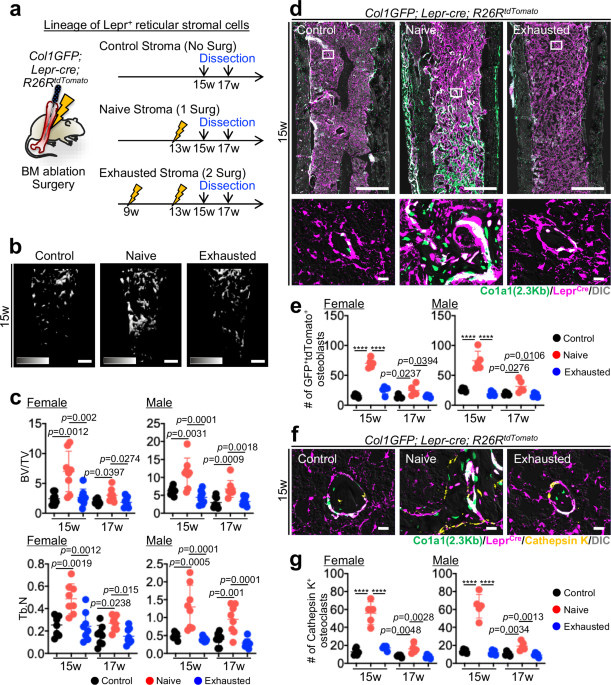
Bone marrow stromal cells, identified by the presence of leptin receptor (Lepr) and C-X-C motif chemokine ligand 12 (Cxcl12), play a crucial role in bone regeneration and maintaining bone health. Following an injury, these cells are responsible for generating reparative bone and restoring the marrow environment. However, a recent study has revealed that these stromal cells have a finite regenerative capacity and can become dysfunctional after repeated injuries, leading to what researchers term 'stromal exhaustion.' This condition is marked by a loss of osteogenic potential and a shift towards adipogenic differentiation, which can significantly impair bone regeneration.
The study demonstrated that Lepr+Cxcl12+ stromal cells lose their ability to generate bone after being activated multiple times. Instead of differentiating into osteoblasts, they increasingly convert into adipocytes, which are fat cells. This shift is accompanied by metabolic abnormalities and chronic inflammation, indicating that the cells are under stress. The researchers found that the dysregulation of Wnt/β-catenin signaling pathways plays a critical role in this process. When Wnt/β-catenin signaling is disrupted, it promotes the conversion of stromal cells into adipocytes rather than maintaining their osteogenic identity. Conversely, activating this signaling pathway can partially restore the cells' ability to generate bone.
The implications of these findings are significant, especially as the global population ages and conditions like osteoporosis become more prevalent. The study emphasizes the need for further research into the mechanisms underlying stromal exhaustion, as understanding these processes could lead to new therapeutic strategies aimed at enhancing bone regeneration. As the study suggests, repeated injuries, such as those seen in fractures or orthopedic surgeries, may lead to a critical barrier in effective bone repair, highlighting the importance of addressing stromal cell function in regenerative medicine.














