FDA-Approved Ultrasound Treatment Provides Rapid Relief for Parkinson's Patient
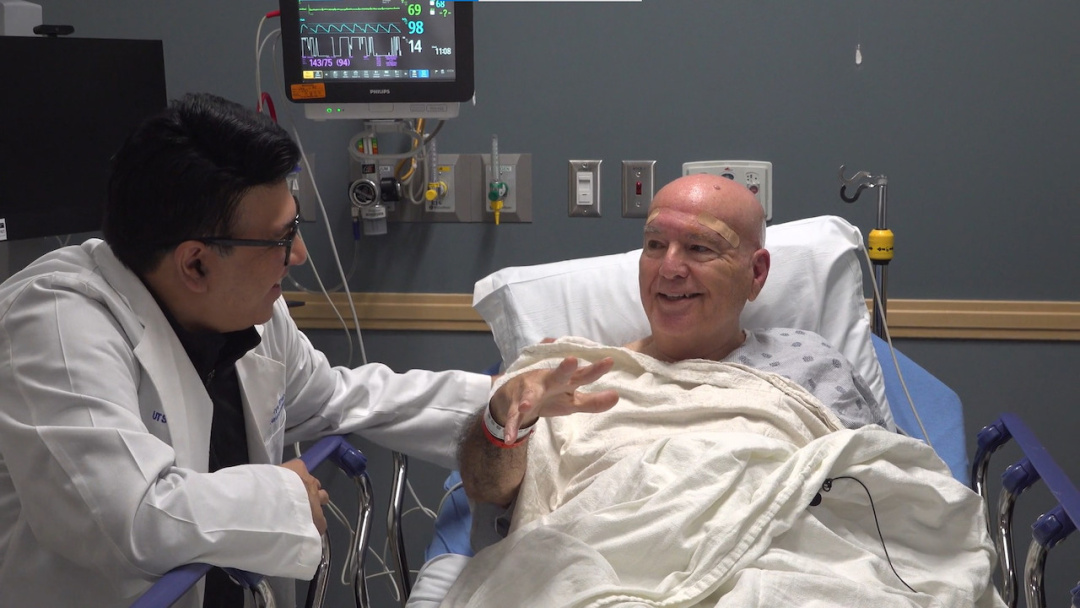
Bud Leavell, a 72-year-old man from Arlington, Texas, has experienced a significant transformation in his quality of life following a new FDA-approved focused ultrasound treatment for Parkinson's disease. Leavell had been living with severe tremors for years, a condition that severely limited his ability to engage in his favorite hobby of repairing radios. However, after just minutes of undergoing the focused ultrasound therapy at UT Southwestern Medical Center, his tremor disappeared entirely.
This innovative treatment, which received FDA approval in January 2026, is designed to alleviate primary motor symptoms of Parkinson's disease, including stiffness and slowness. Unlike traditional deep brain stimulation, which requires invasive surgery, the focused ultrasound method is non-invasive and utilizes high-energy ultrasound waves directed at specific brain targets. Dr. Bhavya Shah, a neuroradiologist at UT Southwestern, explained that the ultrasound energy heats targeted nerve bundles in the brain, effectively stopping the abnormal electrical activity responsible for tremors.
Leavell's journey with Parkinson's began in 2017, shortly after he underwent surgery for thyroid cancer. He noted that his symptoms included a weak voice and a tremor that developed in his right hand, making it increasingly difficult to perform tasks requiring fine motor skills. The focused ultrasound treatment was introduced to him as a viable option when his medication became less effective.
During the procedure, the medical team utilized advanced imaging techniques to map Leavell's brain, ensuring precise targeting of the ultrasound waves. Remarkably, even the initial low-energy ultrasound indicated a strong response in Leavell's tremor, confirming the accuracy of the targeted area. Dr. Shah emphasized the importance of tailoring treatment to each patient's unique symptoms, as Parkinson's disease can manifest differently in individuals.
Following the treatment on April 13, Leavell expressed his astonishment at the immediate results. He stated, "I can hold my hand still with or without a tool in my hand or while working on a project," and he joyfully returned to his passion for repairing antique radios. However, Dr. Shah cautioned that while the focused ultrasound therapy shows promise, potential side effects, such as numbness, balance issues, and memory struggles, can occur in 20% to 30% of patients but typically improve over time.
Unlike deep brain stimulation, which can be adjusted if symptoms return, focused ultrasound does not involve an implantable device, meaning that if symptoms re-emerge, another treatment may be necessary. As this technology is relatively new, long-term data on its effectiveness is still forthcoming. Dr. Shah remains optimistic about the future applications of focused ultrasound in treating Parkinson's disease and other conditions, highlighting its potential as a non-invasive alternative for patients seeking relief from debilitating symptoms.
Leavell, grateful for the opportunity to improve his circumstances, encourages others who may be candidates for this treatment to consult with specialists. He emphasizes the importance of not delaying action, stating, "Don’t let any grass grow under your feet." While he acknowledges that this treatment is not a cure-all for Parkinson's, he describes it as a dramatic and life-changing procedure that has significantly enhanced his daily life.