nce-miR-12220: A Key Regulator in Nosema ceranae Infection of Honeybees
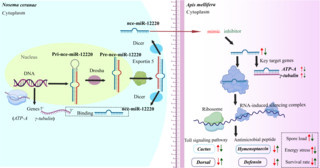
Honey bees, vital pollinators for many crops, face significant health threats from the parasite Nosema ceranae, which infects their gut cells. This study investigates the role of nce-miR-12220, a microRNA produced by the parasite, in modulating the infection process. Researchers found that nce-miR-12220 interacts with key host genes ATP-A and γ-tubulin, which are crucial for energy metabolism and cellular structure. The study utilized various techniques, including dual-luciferase assays and RNA interference, to demonstrate that silencing these target genes led to reduced expression of a virulence-associated gene in the parasite and improved survival rates of infected honeybees. Conversely, overexpressing nce-miR-12220 increased the abundance of ATP-A and γ-tubulin transcripts, promoted parasite spore production, and suppressed the expression of several immune-related genes in the bees. This manipulation also resulted in increased sugar consumption and decreased ATP levels in the midgut, indicating a shift in the bees' energy dynamics. Although altering nce-miR-12220 did not significantly change survival rates, the findings suggest that this microRNA plays a crucial role in balancing the parasite's growth with the host's immune and energetic responses. The study underscores the potential of targeting this regulatory network to develop non-antibiotic strategies for controlling nosemosis in honeybees, which is essential for maintaining their populations and the ecosystems they support. As honey bees are responsible for pollinating a significant portion of global crops, understanding and mitigating the effects of Nosema ceranae is critical for food security and biodiversity. The research highlights the urgent need for innovative approaches to manage bee health amidst increasing challenges from pathogens and environmental stressors.