New Framework IBAS Enhances Understanding of Gene Interactions in Complex Traits
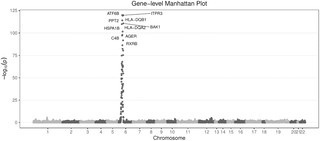
Understanding the genetic basis of complex diseases poses significant challenges in the field of genetics. Traditional studies often focus on individual genes, neglecting the intricate interactions that occur among groups of genes. To address this, researchers have developed the Interaction-Bridged Association Study (IBAS), a framework that captures gene-gene interaction patterns without the need to test every possible interaction explicitly. Instead, IBAS utilizes gene expression data to summarize pathway-level activity, guiding genetic association testing in a more robust manner.
In their research, the authors demonstrate that IBAS offers improved stability and reproducibility compared to existing methods, particularly in noisy or variable data environments. The framework was applied to multiple disease datasets, leading to the identification of both well-known and previously unreported genes. Notably, IBAS was able to uncover candidates with subtle effects that are frequently overlooked by traditional approaches. Many of these findings were validated in independent cohorts and across various tissues, reinforcing their reliability.
The methodology behind IBAS involves several steps. First, it utilizes a reference dataset where both gene expression and genotype data are available. Researchers extract gene expression data corresponding to specific biological pathways and apply dimensionality reduction techniques such as PCA, t-SNE, or UMAP to create interaction components. These components serve as mediators that bridge transcriptomic organization and downstream genotype-phenotype association analysis.
In the second step, these interaction components are associated with individual genetic variants corresponding to the genes in the pathway. The coefficients obtained indicate each variant's contribution to the interactions captured by the interaction components. Finally, the framework tests these associations against phenotype data using advanced statistical methods, resulting in the identification of genes associated with the phenotype of interest.
Overall, IBAS represents a significant advancement in the analysis of gene interactions and their implications for complex traits. By focusing on coordinated gene activity rather than isolated gene effects, IBAS enhances our understanding of the genetic underpinnings of diseases, offering new avenues for research and potential therapeutic targets. The authors have made the IBAS source code publicly available, allowing other researchers to utilize this innovative framework in their studies.














