Exploring the Regulation and Role of Mitophagy in Cellular Metabolism
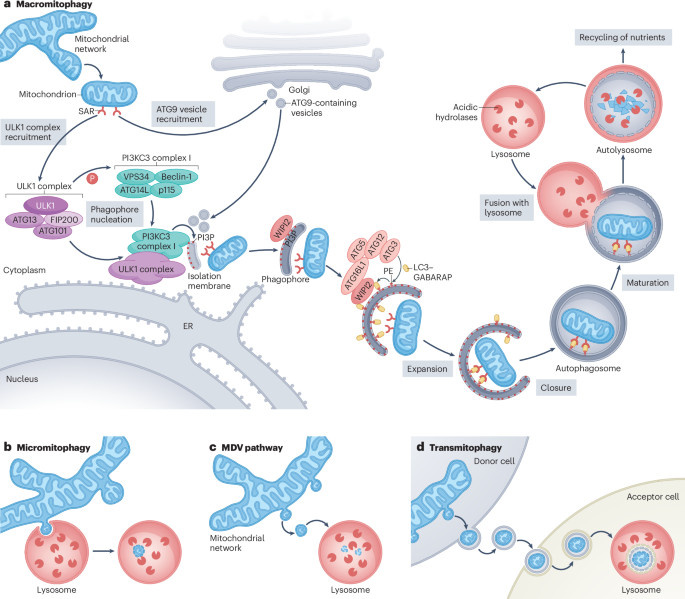
Mitochondria serve as crucial metabolic and signaling centers within cells, and their damage can significantly impair cellular function. Mitophagy, the selective degradation of damaged mitochondria through autophagy, plays a vital role in preserving mitochondrial integrity and ensuring metabolic flexibility. This review by Martens and Ganley outlines the various pathways through which mitophagy occurs, particularly focusing on the roles of PTEN-induced kinase 1 (PINK1) and the E3 ubiquitin-protein ligase Parkin. Mutations in the genes encoding these proteins are linked to early-onset Parkinson's disease, providing insights into the mechanistic underpinnings of mitophagy. However, recent findings suggest that mitophagy can also be mediated through alternative pathways that do not rely on PINK1 and Parkin. Despite advancements in understanding the molecular mechanisms of mitophagy, the physiological roles of these pathways in mammals remain inadequately defined. The review emphasizes the need for further exploration into the specific conditions that trigger mitophagy and the physiological contexts in which these processes are activated. Additionally, the authors discuss the expanding therapeutic potential of targeting mitophagy in various diseases, highlighting its relevance to metabolic health. Understanding the regulation of mitophagy could pave the way for novel interventions aimed at enhancing mitochondrial function and overall cellular health.