Gallstones Linked to Subclinical Coronary Atherosclerosis in Asymptomatic Koreans
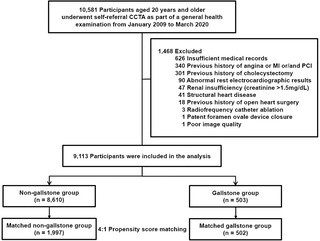
A recent observational study published in PLOS One has explored the relationship between gallstones and subclinical coronary atherosclerosis, focusing on asymptomatic individuals. Previous research has suggested a link between gallstones and coronary artery disease (CAD), yet these studies often overlooked the types of coronary artery plaque involved. This new study aims to clarify this association by analyzing data from 9,113 participants who underwent coronary computed tomography angiography (CCTA) as part of a general health checkup at Ulsan University Hospital in Korea.
The study found that 503 of the participants (5.5%) had gallstones, diagnosed through transabdominal ultrasonography. Using CCTA, researchers evaluated the type of coronary artery plaque and the severity of subclinical coronary atherosclerosis. They discovered significant associations between gallstones and noncalcified plaque, which is often considered high-risk, as well as significant coronary artery stenosis. Specifically, the adjusted odds ratio for gallstones and noncalcified plaque was found to be 1.728, indicating a notable increase in risk, while the odds ratio for significant coronary artery stenosis was 1.386.
These findings suggest that gallstones may independently correlate with high-risk plaque types and significant stenosis, which are linked to poorer cardiac outcomes. The study emphasizes the necessity of recognizing the potential for subclinical coronary atherosclerosis in individuals with gallstones and highlights the importance of effectively managing cardiovascular risk factors in this population.
The research was conducted by a team from Ulsan University Hospital and was approved by the local Institutional Review Board. The retrospective nature of the study allowed for the analysis of existing medical records without requiring informed consent from participants, adhering to ethical guidelines. The study's results contribute to a deeper understanding of the cardiovascular risks associated with gallstones, underscoring the need for further investigation into the management of these patients to mitigate potential health complications.














