Engineered Lactobacillus paracasei Shows Promise as an Antibiotic Alternative in Livestock
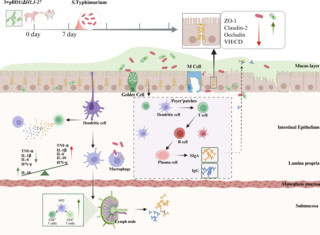
In response to the growing challenge of antimicrobial resistance (AMR) in livestock agriculture, researchers have engineered a strain of Lactobacillus paracasei, designated as 3 × pBD1/ΔHLJ-27. This strain is capable of secreting multicopy porcine β-defensin-1 (pBD1), a cationic antimicrobial peptide known for its broad-spectrum activity. The study highlights the strain's potential as a multifunctional alternative to traditional antibiotics, addressing both growth promotion and protection against Salmonella Typhimurium infections.
The findings indicate that 3 × pBD1/ΔHLJ-27 not only supports animal growth by enhancing body weight and intestinal villi development but also strengthens intestinal barrier integrity. This is achieved through the upregulation of tight junction proteins, which are crucial for maintaining gut health. Furthermore, the engineered strain boosts both systemic and local immune responses, evidenced by increased populations of CD4+ T cells and elevated levels of immunoglobulins such as SIgA and IgG.
In models of Salmonella infection, the strain significantly reduced mortality rates, limited the spread of bacteria, and mitigated intestinal damage. These protective effects are linked to a reduction in excessive inflammatory responses and a favorable reprogramming of host-microbiota interactions, which enhances the gut's resistance to pathogens. The study underscores the strain's ability to integrate antimicrobial activity with immune regulation, marking it as a promising alternative to antibiotics in livestock production.
The research was conducted by a team from the College of Veterinary Medicine at Northeast Agricultural University in Harbin, China, and was published in PLoS Pathogens. The study not only addresses the urgent need for effective antibiotic alternatives in the face of rising AMR but also provides a scientific basis for the development of probiotic formulations that could improve animal health and food safety.
The implications of this research extend beyond livestock, as it contributes to the broader One Health framework, which recognizes the interconnectedness of human, animal, and environmental health. As the prevalence of resistant strains continues to rise, strategies like the use of engineered probiotics may play a crucial role in sustainable agricultural practices and public health.
Overall, the engineered Lactobacillus paracasei 3 × pBD1/ΔHLJ-27 represents a significant advancement in the search for viable alternatives to antibiotics, potentially reshaping the future of animal agriculture.