Study Finds Daily Fruit Juice Consumption Linked to Lower Depression Scores
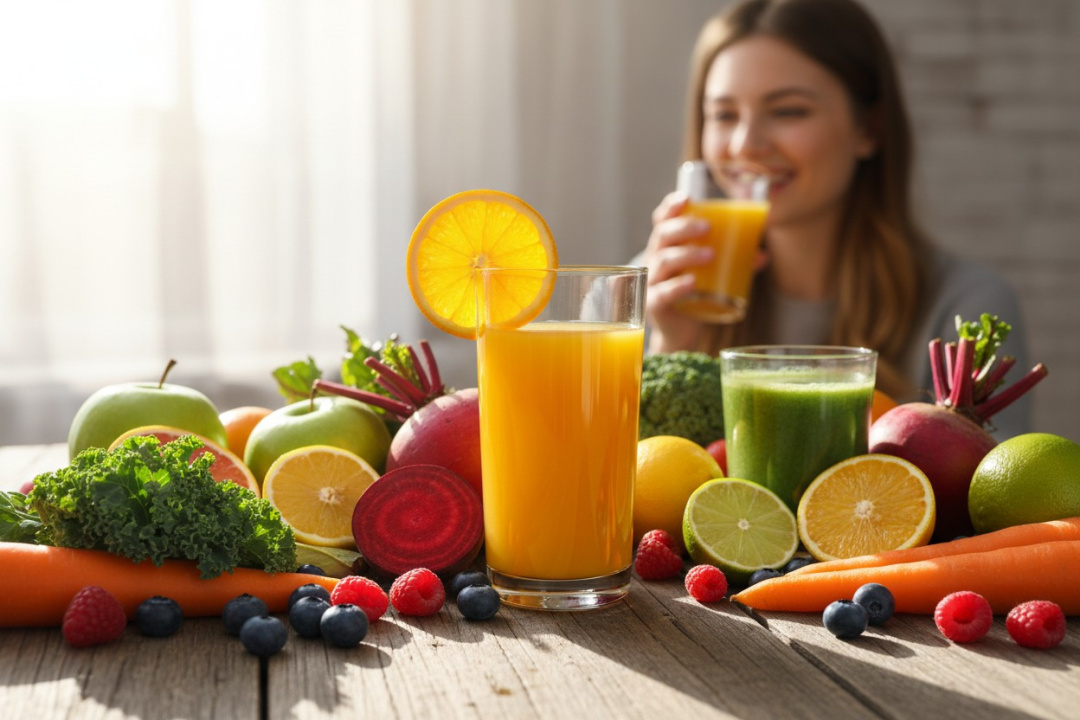
A study conducted at Newcastle University has found that adults who consume a daily glass of 100% fruit juice or a smoothie, alongside an increased intake of fruits and vegetables, report lower depression scores compared to those who do not change their dietary habits. This research adds to the growing body of evidence that links dietary patterns to mental well-being. In the study, participants were randomly assigned to one of three groups: a control group that maintained their usual diet, a group instructed to achieve the 5-a-day fruit and vegetable target using whole foods only, and a third group that followed the same guidelines while also drinking one glass of 100% fruit juice or a smoothie each day. Each participant received £10 per week, and the intervention groups were provided with educational materials to assist in making dietary changes. Mood assessments were conducted using validated questionnaires, including the Patient Health Questionnaire-9 (PHQ-9) for depression and the Generalized Anxiety Disorder-7 (GAD-7) for anxiety. Participants also completed four dietary recalls over the course of the trial, detailing their food intake from the previous 24 hours. The results showed that the fruit juice and smoothie group had an adjusted mean depression score of 2.93, significantly lower than the control group's score of 5.45, indicating a statistically significant 2.52-point difference on a 27-point scale. Researchers noted that this difference, while modest, is promising. The trial was designed to address common barriers to achieving the recommended intake of fruits and vegetables, such as cost and access to fresh produce. Additionally, both intervention groups reported an increase in daily fiber intake by an estimated 8 to 10 grams, suggesting that the inclusion of juice did not hinder the consumption of other fiber-rich foods. No short-term adverse effects were noted in blood markers, including blood fats, inflammation, or blood sugar levels among those consuming fruit juice or smoothies. Dr. Courtney Neal, who completed the study and is now affiliated with the University of Liverpool, emphasized that simple, cost-effective solutions like daily juice consumption could help individuals meet their 5-a-day goal, potentially benefiting their mental well-being. Dr. Oliver Shannon, a senior author of the study, described the findings as encouraging and worthy of further exploration, particularly for those experiencing poor mental health. The study highlights the fact that fewer than 1 in 5 adults in the UK currently meet the 5-a-day recommendation, suggesting that practical dietary changes could have significant implications for mental health. The research was funded by the Fruit Juice Science Center, which may warrant consideration in the interpretation of the results.