Study Identifies Gut Microbiota-Derived Targets in High-Risk Primary Biliary Cholangitis
A recent study published in PLOS One aimed to identify and prioritize gut microbiota-derived metabolite-associated host candidate targets in high-risk primary biliary cholangitis (PBC) through an integrative multi-omics analysis and external validation. Primary biliary cholangitis is a chronic autoimmune liver disease characterized by the progressive immune-mediated injury of small bile ducts, which can lead to severe complications such as liver fibrosis and cirrhosis. The study focused on understanding the molecular features that could help identify patients at higher risk of disease progression.
The researchers conducted differential expression analysis using liver samples from high-risk and low-risk PBC patients, identifying 163 differentially expressed genes. They integrated this data with information from the gutMGene database and the Open Targets Platform to identify candidate genes associated with gut microbiota-derived metabolites. Through this integrative analysis, six core candidate genes were identified: CCL2, CDKN1A, BCL2, CD44, FOS, and MAPK3. Among these, CCL2 stood out with the highest priority score, showing significant upregulation in high-risk PBC liver samples and associations with various gut microbiota-related metabolites, including acetate and butyrate.
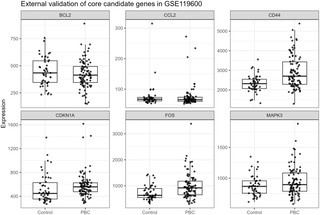
The study also utilized the Human Liver Cell Atlas to localize these candidate genes within immune-related cell populations, such as macrophages. The findings indicated that high-risk PBC samples exhibited increased chemokine signaling, with CCL2 expression positively correlated with this signature. Additionally, the external validation using the GSE119600 cohort confirmed that CD44, FOS, and CDKN1A were significantly upregulated in PBC samples compared to controls.
While the study provides valuable insights into the potential roles of these candidate genes in the context of high-risk PBC, it is crucial to note that the findings do not establish direct causality between gut microbiota-derived metabolites and the disease. Instead, the study lays the groundwork for future experimental validation and further investigation into the gut-liver axis's role in PBC.
The research highlights the importance of understanding the molecular mechanisms underlying PBC and suggests that gut microbiota-derived metabolites may play a significant role in the disease's immune-inflammatory environment. However, the authors caution that while associations have been identified, further studies are needed to validate these candidate targets in independent cohorts and experimental settings. This integrative approach represents a step forward in the quest to understand and potentially improve the management of high-risk PBC, emphasizing the need for ongoing research in this area.