Drought Crisis Threatens UK Farmers Amid Record Low Rainfall
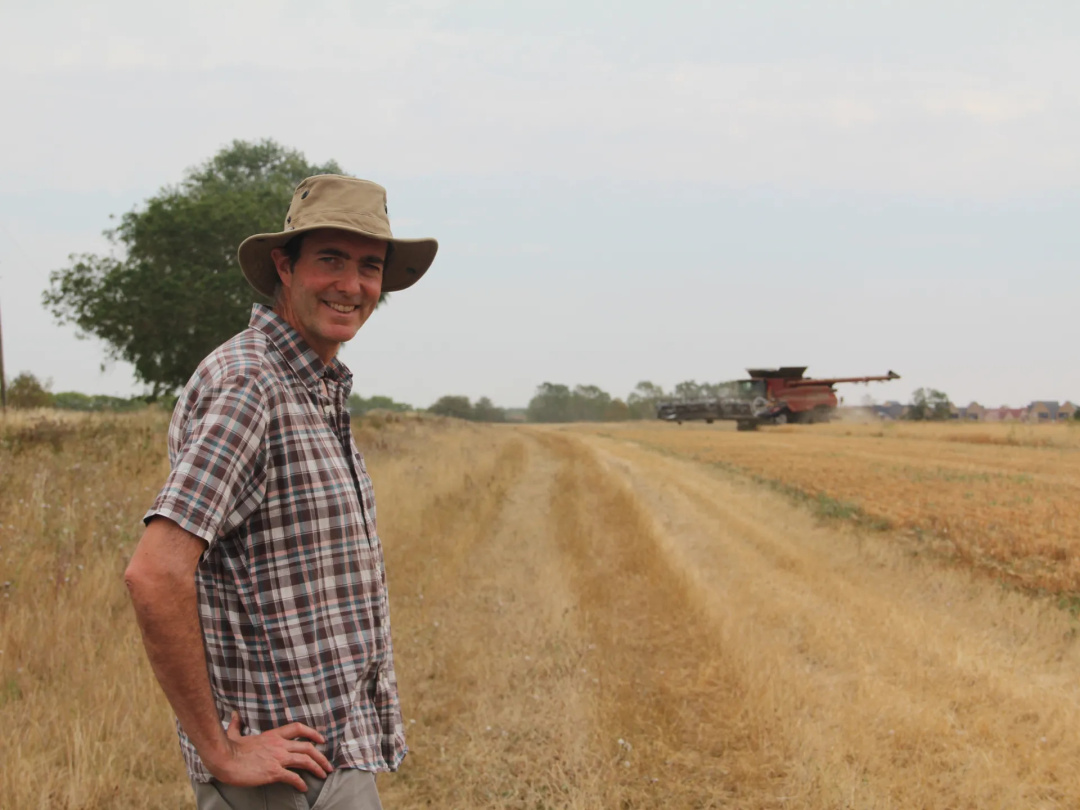
Cambridgeshire, United Kingdom – Tom Pearson surveys his field, where deep cracks have formed in the soil, a stark indication of the drought's severity. The ground, stripped of moisture, has split beneath the remnants of his oat crop at Manor Farm, located near Cambridge. Despite his efforts over the past 11 years to enhance soil resilience, the early heat of this growing season has taken a toll. "It makes you wonder if it’s worth it," Pearson reflects, though he acknowledges that the situation could have been worse had he not implemented sustainable practices.
The current agricultural landscape in the UK is grim, as nearly 75% of land in England is now classified as being in drought due to record-low rainfall and soaring temperatures. The country is experiencing its fifth heatwave of the summer, with July marking the driest month since records began in 1836. Farmers are grappling with the reality of significantly reduced yields, with Jamie Burrows, chair of the National Farmers’ Union’s Combinable Crops Board, noting that over half of the winter wheat crop was harvested before the end of July, highlighting the challenges faced by arable farmers this season.
This year’s drought is not an isolated incident; it marks the third drought in five years and the second consecutive year of such conditions. Helen Wakeham, chair of the National Drought Group, has described the situation as “exceptionally serious,” warning of long-lasting impacts on agriculture and food supply.
Pearson’s journey into farming was unconventional. After training as a doctor and working in the NHS and humanitarian aid, he returned to his family farm in 2015 without formal agricultural training. He adopted regenerative farming methods, including no-till practices and reduced chemical use, and has recently experimented with ancient grain varieties that have deeper roots and are better suited to dry conditions. While these methods show promise, Pearson admits that his overall yields have declined for three consecutive years. Despite the benefits of reduced tillage, the ongoing extreme weather has severely impacted his harvests.
The agricultural sector entered this growing season already vulnerable, with rising fuel and fertilizer prices exacerbated by geopolitical tensions, including conflicts in the Middle East. The drought struck shortly after planting, compounding the difficulties farmers face.
Pearson advocates for government investment in crop varieties that are bred for drought and disease resistance, as well as improved water storage solutions on farms. He emphasizes the need for better data and knowledge in the industry, particularly regarding which crop varieties can withstand the changing climate. Rowan Douglas, an insurance risk specialist, highlights the financial risks farmers face, noting that extreme weather losses in the EU average 28 billion euros annually, a figure projected to rise significantly by 2050.
The lack of a comprehensive national crop insurance scheme in the UK leaves farmers exposed to these risks. Pearson’s call for government support is not just about subsidies; it’s about fostering a deeper understanding of agricultural resilience and the nutritional benefits of diverse crop varieties.
As urban development encroaches on agricultural land, Pearson is exploring peri-urban farming to connect his produce directly to local consumers. This approach aims to enhance awareness of food origins and the impact of climate change on agriculture. The challenges faced by Pearson and his peers underscore the urgent need for systemic changes in the agricultural sector to ensure food security in the face of climate change.