New Bowel and Gut Health Resources for Patient Education in Clinics
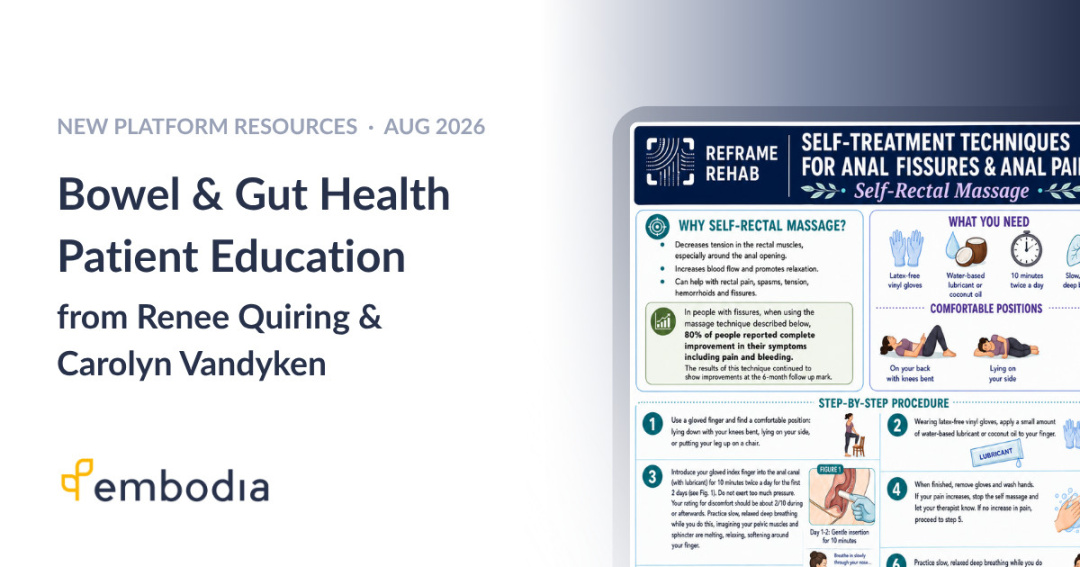
A new collection of bowel and gut health resources has been developed to address the often-ignored symptoms patients experience regarding their gastrointestinal health. Created by Carolyn Vandyken and Renee Quiring of Reframe Rehab, this collection aims to bridge the gap in patient education by providing nineteen handouts that cover a range of topics from bloating and constipation to the gut-brain connection and pelvic-floor-related bowel symptoms. Additionally, three clinical assessment resources are available exclusively to participants in the Year of Mentorship program.
Carolyn Vandyken, a pelvic health physiotherapist with 37 years of clinical experience, co-owns Reframe Rehab and leads the Year of Mentorship program. She is known for her ability to translate complex biopsychosocial concepts into accessible language for both practitioners and patients. Renee Quiring, a registered physiotherapist, transitioned to pelvic health after years in orthopaedics and neurorehabilitation. Together, they emphasize that bowel health should be viewed as a whole-body issue rather than merely a plumbing problem.
The nineteen patient education handouts are organized into four groups, allowing clinicians to provide tailored information relevant to each patient's care journey. In addition to these handouts, the collection includes three clinical assessment resources designed for practitioners. These resources cover essential topics such as the Rome V diagnostic criteria for irritable bowel syndrome (IBS), gastrointestinal anatomy, and common gut disorders, helping clinicians enhance their understanding and approach to complex bowel presentations.
The resources highlight the interconnectedness of bowel symptoms with various systems, including diet, the microbiome, the nervous system, and pelvic floor coordination. This holistic perspective is crucial for patients who may feel embarrassed discussing their symptoms, as it encourages them to understand the broader implications of their health.
The collection also integrates with Embodia's Home Exercise Program (HEP), allowing practitioners to share educational materials alongside exercise prescriptions. This feature is designed to facilitate patient engagement and understanding of concepts like the gut-brain axis, enhancing the overall treatment plan.
The initiative stems from a session titled "How to Craft a Pleasurable Stool," led by Renee Quiring as part of the Year of Mentorship program. This session aimed to provide practitioners with practical strategies for addressing digestive health and its impact on the pelvic floor. The resources are intended for clinicians, with the patient handouts written in plain language to ensure accessibility.
Overall, this new collection represents a significant step forward in addressing the educational needs of both patients and practitioners in the realm of bowel and gut health, fostering a better understanding of these often-overlooked issues.