Drosophila Larvae Rapidly Escape Pathogenic Bacteria via Multisensory Detection
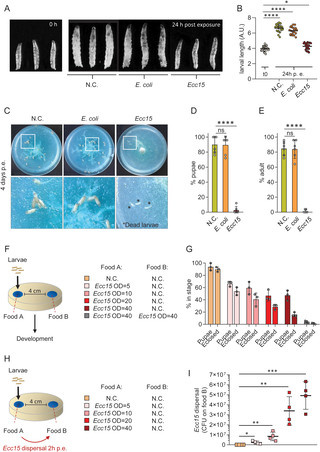
In a significant advancement in our understanding of host-microbe interactions, researchers have uncovered how Drosophila melanogaster larvae detect and respond to harmful bacteria. The study focuses on the larvae's rapid escape behavior when exposed to food contaminated with the natural bacterial pathogen Erwinia carotovora carotovora 15 (Ecc15). This pathogen is known to thrive in decaying plant matter, which overlaps with the ecological niche of Drosophila. The larvae initially approach the contaminated food but quickly retreat upon contact, a behavior that is crucial for their survival in microbe-rich environments.
The research highlights that the larvae's detection of Ecc15 is not merely based on the presence of the bacteria but rather on its metabolic activity. The study demonstrates that stationary-phase Ecc15 cells do not elicit the same avoidance response, indicating that the larvae rely on signals from live, metabolically active bacteria. This response is mediated by two key sensory pathways: a gustatory receptor that detects aversive contact cues and an olfactory receptor that senses bacterial odors. Disruption of either pathway results in a loss of the escape response, underscoring the importance of coordinated gustatory and olfactory signals in evaluating microbial threats.
The implications of this behavior are significant. By rapidly abandoning contaminated food, the larvae reduce their contact time with pathogens, which helps mitigate the potential developmental impacts of early pathogen exposure. However, this behavior also has a dual effect, as dispersing larvae can transfer viable bacteria to new substrates, potentially facilitating the spread of pathogens.
The study's findings provide a novel perspective on how insects like Drosophila balance the need for nutrients with the risk of encountering pathogens. It establishes a model for further exploration into the sensory mechanisms that guide behavioral decision-making in response to microbial cues. This research not only enhances our understanding of insect behavior but also contributes to broader discussions on host-pathogen dynamics and the evolutionary adaptations that arise from these interactions.














