Study Examines Long-Term Cardiovascular Risks Linked to Assisted Reproductive Technology
A nationwide cohort study conducted in Sweden has explored the long-term cardiovascular risks associated with assisted reproductive technology (ART) and infertility. The research, led by Angelo Mezzoiuso and colleagues, analyzed data from 380,756 women who had their first birth between 1992 and 2002, following them until the end of 2023. The study aimed to assess the risk of various cardiovascular conditions, including acute myocardial infarction, cerebral ischemic conditions, and chronic kidney disease, among others, in women who conceived using ART compared to those who conceived without it.
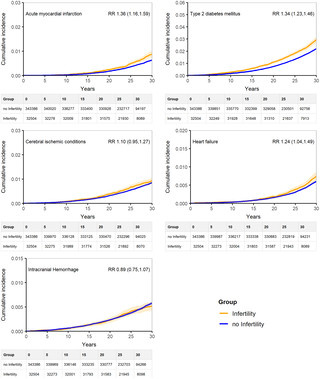
The findings revealed that ART was not associated with a higher risk of cardiovascular disease overall, with the exception of an increased risk for cerebral ischemic conditions, which had a 30-year risk ratio of 1.44 (95% Confidence Interval [CI] [1.09,1.90]). This suggests that while ART may have some implications for specific conditions, it does not broadly elevate cardiovascular risk for most women. However, the study also found that women with a history of infertility exhibited consistently higher risks for all cardiovascular outcomes, indicating that underlying infertility itself may be a significant factor in cardiovascular health.
The researchers utilized Swedish national registers to conduct their analysis, adjusting for various baseline characteristics such as age, body mass index, and socioeconomic factors. Cumulative risks were evaluated using inverse-probability weighted Kaplan-Meier curves, and the study's design allowed for a comprehensive follow-up over 30 years, which is notably longer than many previous studies on this topic.
Despite the reassuring findings regarding the long-term safety of ART, the study emphasizes the need for further research to fully understand the implications of infertility on women's cardiovascular and metabolic health. The authors note that the study's limitations include the relatively low number of women exposed to ART during the early years of its implementation, which may affect the precision of risk calculations. Overall, the research contributes to the growing body of literature suggesting that infertility could serve as a marker for cardiovascular and metabolic disease in women, warranting further investigation into the long-term health outcomes for this population.