Viral Mechanism Enhances Replication by Disrupting Cell Cycle Regulation
Viruses have evolved sophisticated strategies to manipulate their host cells for efficient replication. A recent study focused on the chicken anemia virus (CAV), a small single-stranded DNA virus, reveals how it inhibits the anaphase promoting complex/cyclosome (APC/C), a crucial regulator of the cell cycle. The APC/C plays a vital role in controlling the degradation of specific proteins that are essential for cell division. By targeting this complex, CAV effectively disrupts normal cell cycle dynamics, which is critical for its replication process.
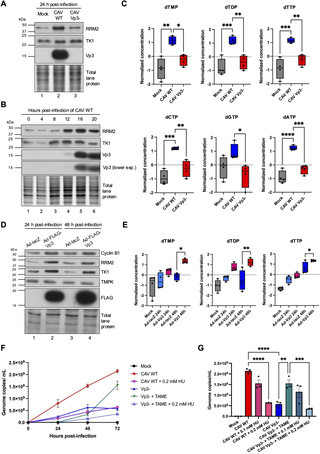
The research, conducted by a team from McGill University, demonstrates that the Vp3 protein of CAV binds to and inhibits the APC/C, resulting in a significant mitotic arrest during viral infection. This inhibition leads to an increase in nucleotide pools, the building blocks necessary for viral DNA synthesis. The study found that a mutant strain of CAV lacking the Vp3 protein exhibited impaired replication capabilities, which could be rescued by directly inhibiting the APC/C, underscoring the importance of this viral strategy.
Through metabolomic profiling, the researchers observed that Vp3 expression during CAV infection resulted in a broad increase in nucleotide levels, suggesting that the virus redirects cellular resources to support its replication. This finding is significant as it sheds light on a common tactic employed by various viruses, including adenovirus and HIV, to hijack host cell machinery for their replication needs. The study's insights into the molecular interactions between viruses and host cell regulators could pave the way for new antiviral strategies targeting these mechanisms.
This research not only enhances our understanding of viral replication but also highlights the potential for developing antiviral therapies that could disrupt these viral strategies. By targeting the APC/C and similar pathways, it may be possible to create effective treatments that limit viral proliferation in infected cells. The implications of these findings extend beyond CAV, suggesting that similar mechanisms might be at play in other viral infections, warranting further investigation into the role of cell cycle regulation in viral pathogenesis.














